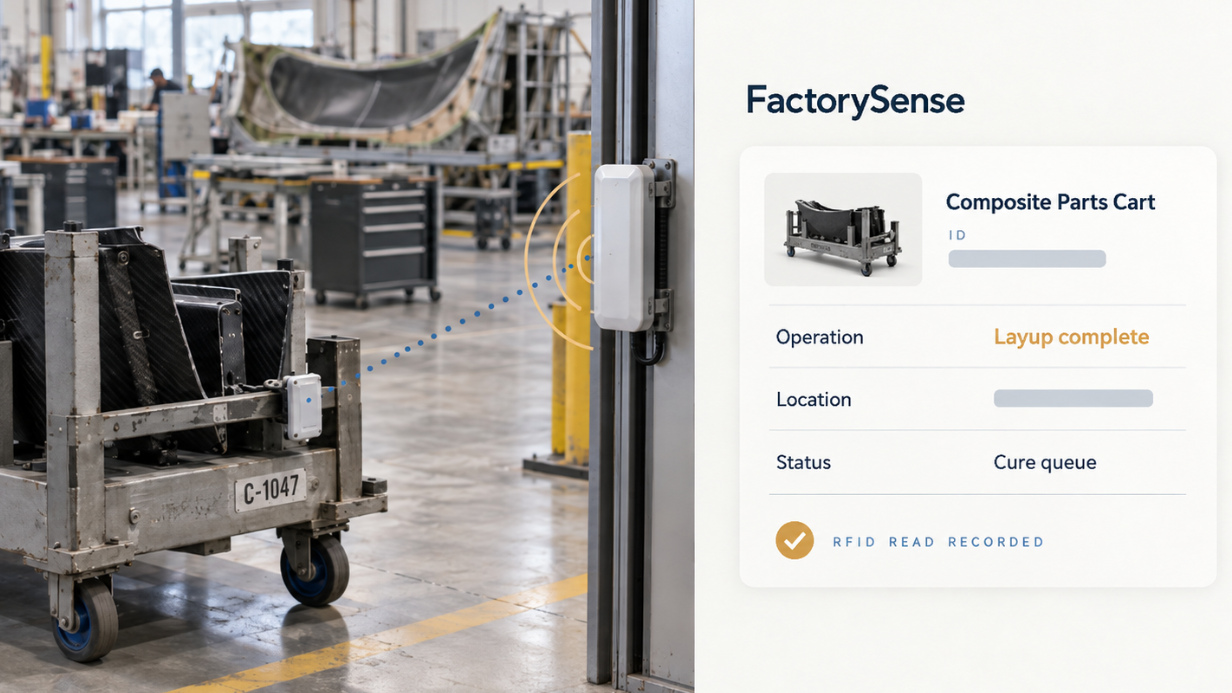
FactorySense and Northrop Grumman Named Runner Up in the RFID Journal 2024 Awards for Best Large-Scale Deployment of RFID

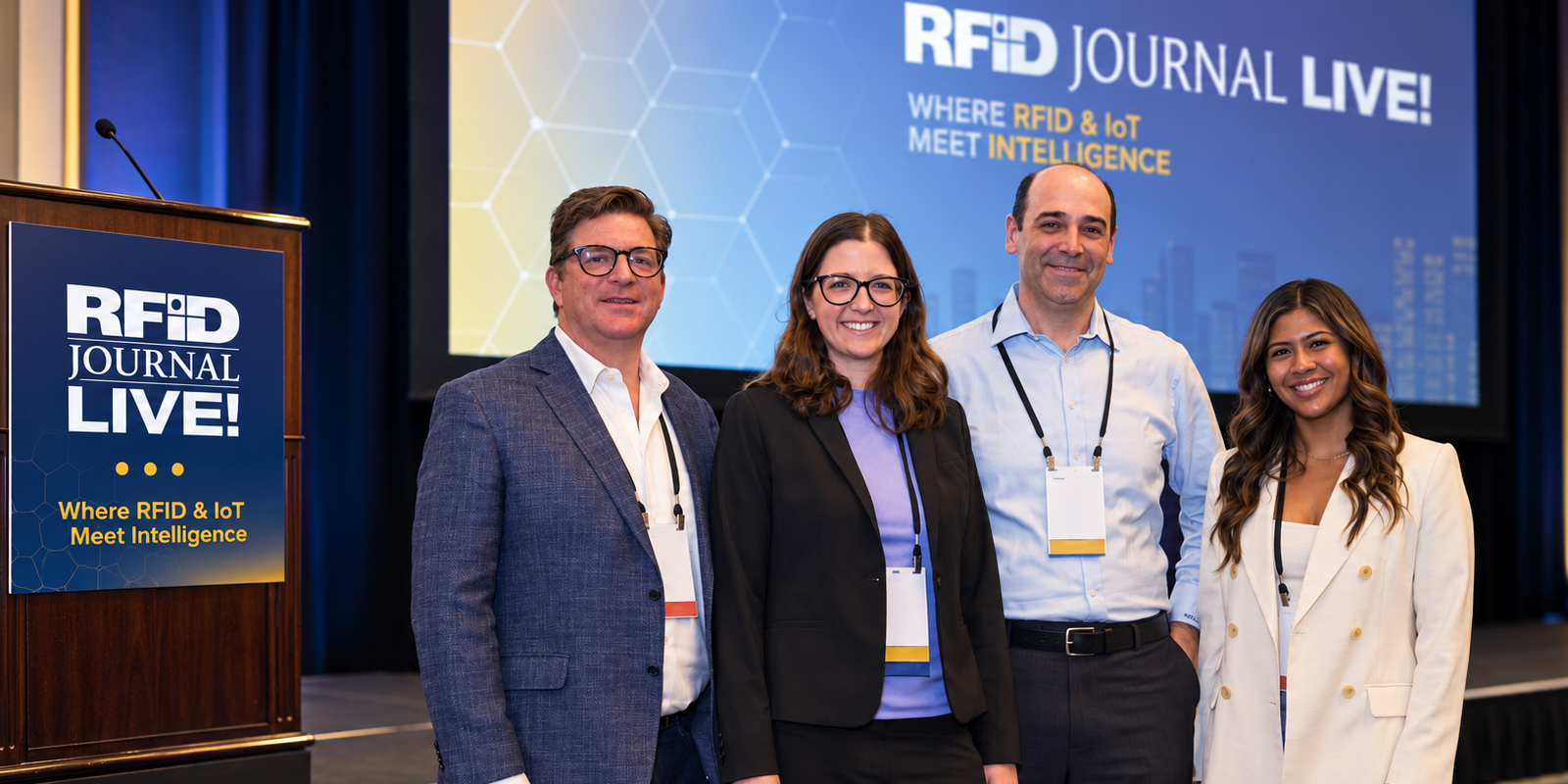
- FactorySense and Northrop Grumman were named runner up in the RFID Journal 2024 Awards for Best Large-Scale Deployment of RFID, and presented the deployment jointly at RFID Journal LIVE! 2024.
- The deployment covered Space Park in Redondo Beach: 1.5 million square feet across 46 buildings, where manual tracking was producing asset losses and work-in-process inefficiency.
- At campus scale the operational problem is rarely loss in the literal sense. It is time spent searching for assets that are on site but cannot be located.
FactorySense and Northrop Grumman were named runner up in the RFID Journal 2024 Awards for Best Large-Scale Deployment of RFID, and presented the deployment jointly to the conference at RFID Journal LIVE! 2024.
The awards recognize deployments rather than products, which is the distinction that makes them worth entering. What follows is a summary of what the project addressed and what changed.
The problem at campus scale
Northrop Grumman's Space Park campus in Redondo Beach, California covers 1.5 million square feet across 46 buildings. At that size, managing work orders and assets by manual methods stops being an inconvenience and becomes a structural constraint.
The specific difficulty is one we see repeatedly in large aerospace and defense facilities. Assets are rarely lost in the sense of being gone. Something is on site, it is in one of 46 buildings, and nobody can say which. The cost lands as time spent searching, as work waiting on equipment that exists, and as replacement purchases for items that were never actually missing.
Manual tracking also made work-in-process visibility difficult to sustain. A record updated by hand is accurate at the moment it is written and decays from there, and across a campus of that scale the decay outpaces the updating.
What was deployed
Northrop Grumman deployed FactorySense's RFID in a Box platform across the program. The important point was not a particular reader or tag; the hardware, software and deployment model had to be designed together for a large aerospace site.
Three characteristics of the site shaped the design. The layout, meaning how material and equipment actually move between 46 buildings rather than how the site plan suggests they should. The environmental constraints, which in aerospace manufacturing include metal-dense areas where tag placement and read point design are not straightforward. And the security requirements that apply to a facility of this type, which affect what data can be held where and who can see it.
The deployment covered asset tracking and management alongside work order visibility, with the system designed so that Space Park staff could operate and extend it themselves rather than depending on us for routine changes.
What changed
Northrop Grumman reported significant improvements across four areas in the first year.
- Asset losses fell substantially. Real-time location meant assets that were on site could be found rather than written off and replaced.
- Labor spent on searching fell significantly. The time absorbed by go-finds, which rarely appears as a tracked cost, was reduced materially.
- Delivery performance improved, particularly against critical deadlines where the constraint had been locating material rather than producing it.
- Production cycle efficiency improved, driven by the same reduction in search time.
The economics followed from those four rather than from anything more exotic. When a campus stops paying for searching and replacement, the investment case is made out of costs the organization was already carrying without measuring.
Why we entered it
Awards are a weak form of evidence on their own. What made this one worth entering is that it required a joint submission and a joint presentation, which means the customer stood behind the account of what happened in front of an industry audience. That is a more demanding test than a vendor-written case study.
The deeper point is about scale. A great deal of RFID marketing describes single-line or single-warehouse deployments. Space Park is 46 buildings, and the problems that emerge at that size, read point density, staff adoption across many teams, and security constraints that vary by area, are different in kind rather than degree.
Related reading
The full write-up of the deployment is in our Northrop Grumman Space Park case study. For the broader picture of how RFID applies in this sector, see RFID tracking in the aerospace industry.
The next step
If you are looking at a multi-building or multi-site deployment and want the read point design and integration scope worked out against your facility, book a Facility Visibility Assessment.
Image courtesy of Northrop Grumman.
Media inquiries: FactorySense Media Relations, media@factorysense.io, +1 (972) 984-7176.
What was the scope of the deployment?
Northrop Grumman's Space Park campus in Redondo Beach, California: 1.5 million square feet across 46 buildings, covering work order and asset tracking.
What was the award?
Runner up in the RFID Journal 2024 Awards for Best Large-Scale Deployment of RFID, presented at RFID Journal LIVE! 2024. FactorySense and Northrop Grumman presented the deployment jointly to the conference.
Why does campus scale change the problem?
Across 46 buildings an asset is rarely lost in the sense of being gone. It is on site and nobody can say where, and the cost is the time spent searching. That makes the operational question where something is now rather than what the inventory record says it should be.
Schedule a complementary working session with an RFID professional to discuss your floor or yard, your systems of record, and where the visibility gap between them is costing you.
Book a session