
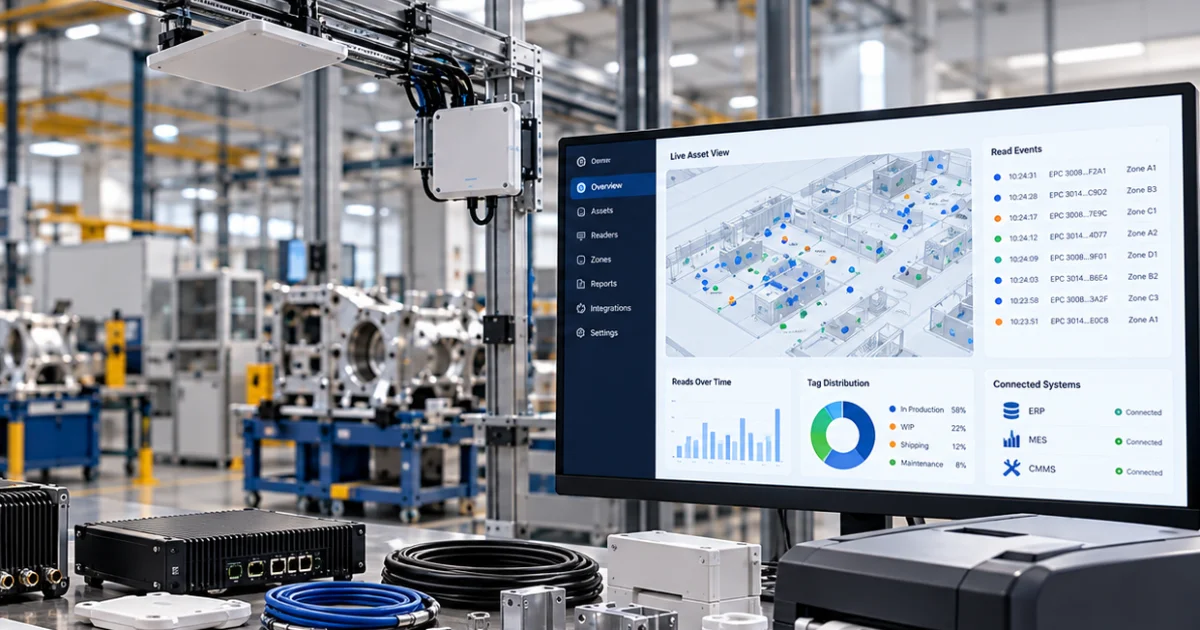

Turn Go-Finds into Go-Gets™ with FactorySense RFID inventory management.
When the system says a part is in stock but nobody can find it, someone has to go looking. FactorySense pairs RFID readers with inventory management software to record stock as it arrives or leaves. Fixed readers cover the handoff points you choose, and handhelds help with cycle counts. Confirmed movements update your ERP or WMS, and your team can review anything that needs a second look.
Inventory errors start long before they are discovered.
Records drift when receipts, transfers, issues, and returns get entered late or not at all. The next cycle count finds the gap, but rarely tells you where it started. An RFID inventory system captures inventory movements as they happen and makes audits far faster. The hard part is the design: each tag has to point to the right item, container or asset, and each read has to become the transaction your inventory system expects.
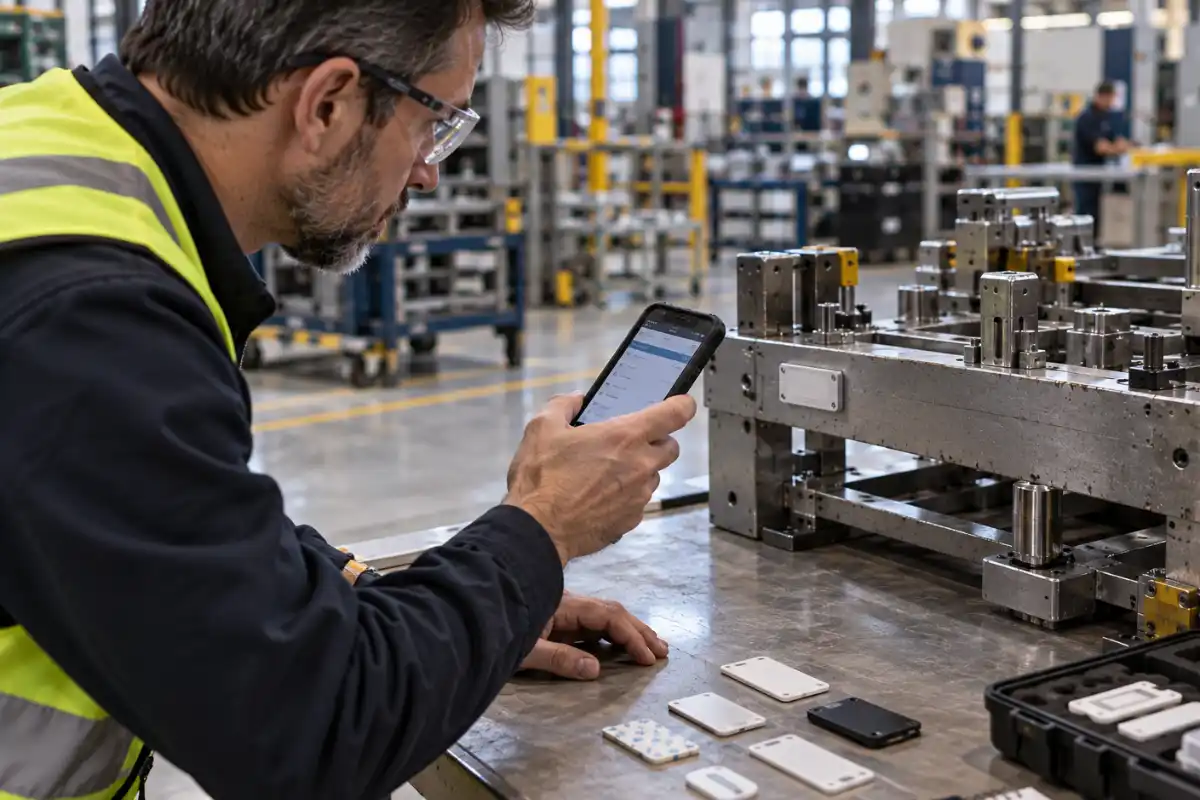
RFID vs. barcode: which one fits the process?
Some steps need a deliberate scan. Others break down because scans get skipped, rushed or forgotten. This comparison walks through line of sight, cost, environment and using both on the same label, so you can pick the right method for each transaction.
Read the comparison
Where does RFID fit alongside barcodes?
If your team already uses barcodes, the question is where RFID would make the work easier. This short comparison gives you a starting point for deciding which approach fits your inventory process.
Source: Signals to Sense Podcast
Catch the handoff that changes the stock record.
Bins and parts can leave the stockroom before the inventory system knows about it. We place readers where the handoff happens, and FactorySense.io checks each tagged item or container against the move it expected. A bin read repeatedly still counts as one movement. Missing or unclear reads need review before the stock record changes. Passive RFID can record passage through a doorway or presence in a read zone.
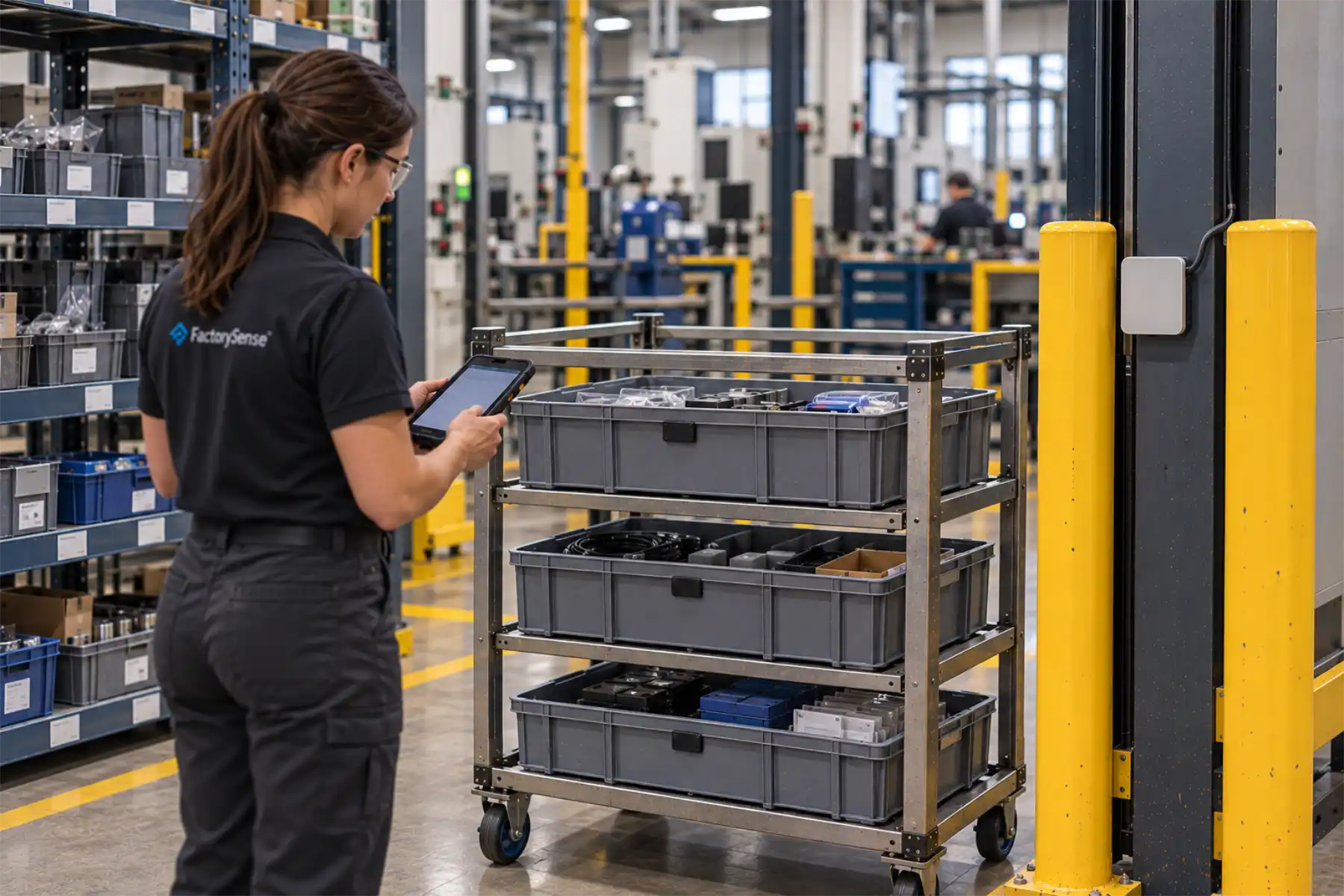

RFID inventory tracking for the movements that matter most.
From manufacturing stock to tool cribs and reusable containers, we design RFID inventory tracking around how your material actually moves.
Confirm tagged items or carriers as they're received. Link each tag to the right item, lot, serial number or container, and flag receipts that are missing or unexpected.
Capture moves between stock areas and production. We agree up front on what counts as a valid transfer and how the destination gets recorded.
Record issues and returns where the physical process gives reliable evidence. Consumption needs a clear business rule, because a part sitting near a work cell hasn't necessarily been used.
Use a handheld reader to count a stock area without scanning every label individually. The software compares the tags it finds with the expected stock list. Fixed readers can watch selected moves between counts. If a tag doesn't show up, check that the reader reached it before adjusting the quantity.
Use RFID tool tracking to see who has which tool and which returns are overdue. Tool custody stays separate from the quantity and value of consumable stock.
Track totes, bins, carts and returnable packaging, and keep each container linked to its contents when material is replenished, split or repacked.
How we roll out an RFID inventory system.
Prove one workflow works before expanding across the facility.
Map stock and movement
Find out who owns each record, how items and locations are identified, and where accuracy breaks down. Then pick one movement or audit workflow with a clear business payoff.
Test capture in real conditions
Trial tags, fixed readers or handhelds with your actual materials and shelving. Look for missed tags, stray reads from neighboring stock, and whether operators can work with it comfortably.
Validate the transaction
Test matching, destination rules, duplicates and exceptions against your ERP or WMS before the workflow goes live.
Measure the results
Compare counting effort, discrepancies, accepted transactions and manual fixes. Agree on tag replacement, replenishment and support before rolling out further.
RFID inventory software that works with your ERP.
FactorySense.io filters repeated reads and checks that a move makes sense before anything reaches your ERP or WMS, and operators see the ones that don't. Your ERP or WMS still holds quantities and value. We map each confirmed move to the transaction it already expects, such as a transfer from the stockroom to production.
RFID inventory management questions
Straight answers for planning your workflow.
Can RFID count everything in a stockroom?+
It depends on the tags, the materials, how items are stored and how they're read. Metal and liquids, for example, can interfere with reads. A site trial shows what can be read reliably and where barcode or manual checks still make sense.
Does every item need an RFID tag?+
No. You might tag individual assets, serialized parts, cases or reusable containers. What you tag determines what the system can reliably tell you about your inventory.
Can an RFID inventory system integrate with our ERP?+
Yes, as long as your ERP's interfaces support the transactions involved. We work with whoever runs your ERP to map items and locations, set permissions and agree what happens when an update is rejected.
What should we look for in RFID inventory management software?+
Ask the vendor to walk through a cycle count and a stockroom transfer using your item records. A count checks what's present, and a transfer changes where stock is recorded. See how duplicate reads are handled and who can approve an adjustment. Also ask how your team will find out if an ERP or WMS update fails.
How much does an RFID inventory system cost?+
Cost depends on what you tag, the number of fixed read points or handhelds, installation, software and the depth of ERP or WMS integration. A focused first workflow helps establish the scope. We also account for commissioning tags, training, support and the exceptions your team will need to handle.
How is this different from WIP or calibrated tool tracking?+
Inventory tracking is about whether stock is where the record says it is. WIP tracking follows jobs between production steps and how long they wait. Calibrated tool tracking adds calibration due dates and certificates on top of who has the tool.
Let's find where your inventory records fall behind.
Tell us what you stock and where the counts keep coming up short. We'll help you pick a first workflow that cuts down the Go-Finds, then work out what it takes to put it in place.