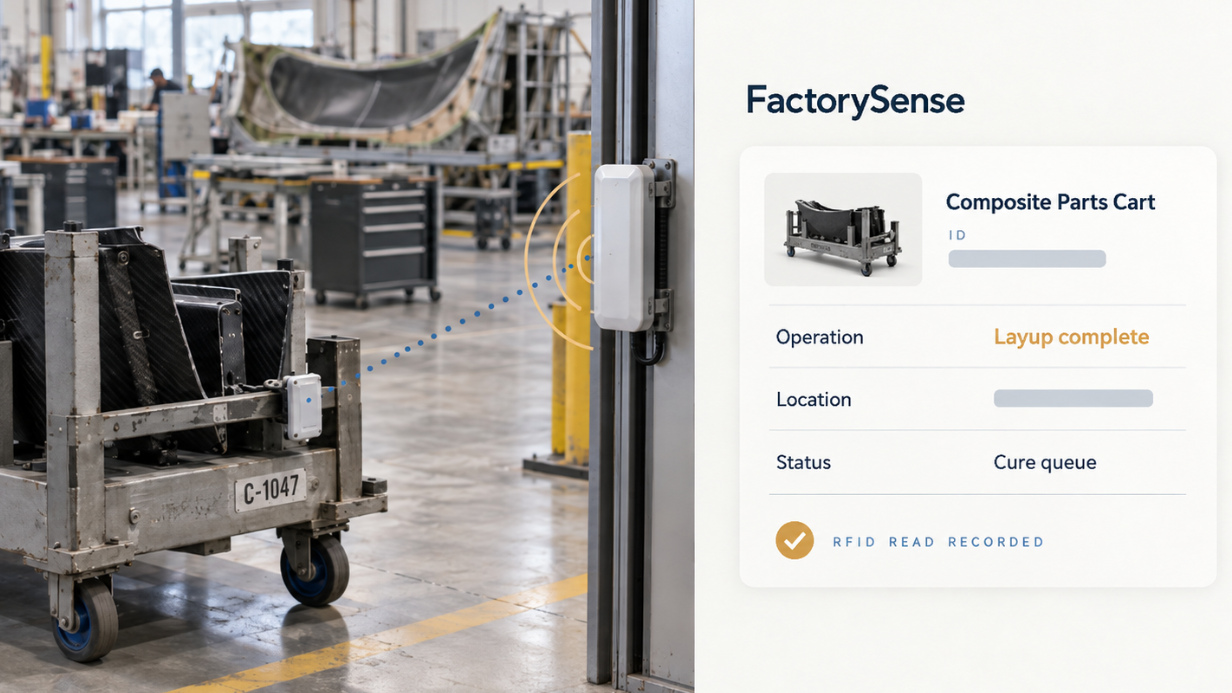
RFID Inventory Tracking at a Tier 1 Automotive Supplier

- The manufacturer reported inventory accuracy improving from roughly 80-90% under the prior process to near-perfect levels after RFID was introduced.
- Manual inventory-audit time fell by more than 70% as fixed read points captured selected material movements automatically.
- ERP integration and handheld search gave production, warehouse and quality teams a shared record for routine movements and exceptions.
The inventory record depended on scans that did not always happen
A Tier 1 automotive parts manufacturer was using barcode scans and handwritten records to track material across multiple production lines and inventory locations. The process worked when every scan occurred at the right moment. When a scan was skipped, misread or entered later, the system record drifted away from the material on the floor.
That showed up in familiar ways: time spent reconciling inventory, parts that were physically available but difficult to locate, and production delays caused by a system quantity or location that operators did not fully trust.
RFID was applied to the movements that mattered
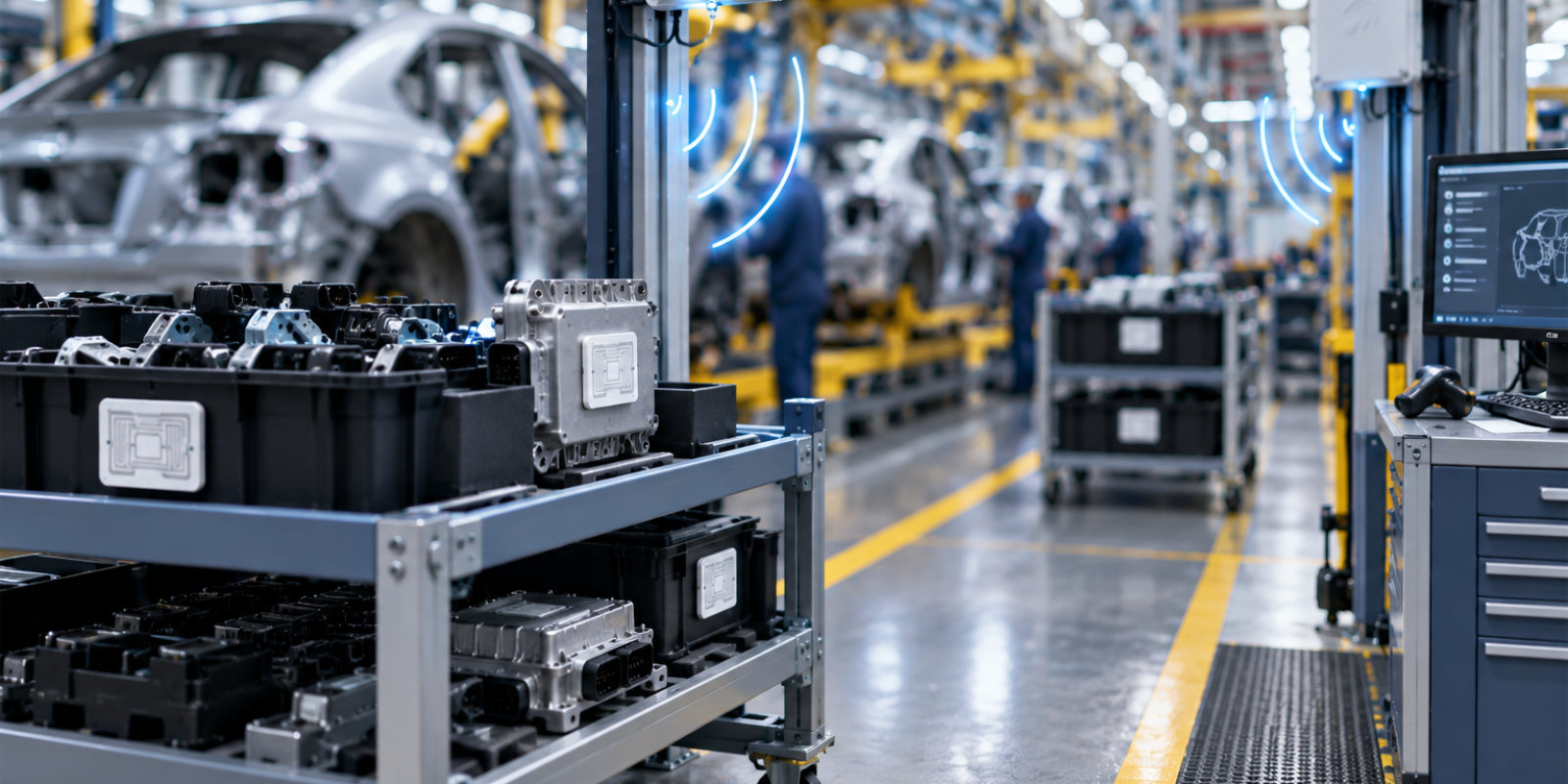
FactorySense deployed passive RFID tags on selected inventory units and subassemblies. Fixed readers were placed at controlled transition points so routine movement could create an observation without requiring an operator to stop and scan each item individually.
Handheld RFID readers remained part of the design. They gave warehouse and quality personnel a way to conduct spot checks and locate a specific item when the fixed infrastructure could tell the system where it was last observed but not its exact position on a rack or in a work area.

The RFID events were connected to the ERP
FactorySense software filtered the reader observations, resolved the RFID identity and sent the resulting business events into the manufacturer's ERP environment. That prevented the RFID system from becoming a separate inventory ledger that employees had to reconcile against the system of record.
The same event history supported production and warehouse dashboards, while handheld search provided a practical exception path when an item was not where the system expected it to be.
The manufacturer reported a material improvement in inventory control
Before the deployment, the company reported inventory accuracy in the 80% to 90% range. After RFID was introduced, it described accuracy as near-perfect and reported that time spent on manual inventory audits fell by more than 70%.
The more important operating change was that the organization had less reconciliation work between the physical floor and the ERP. Production delays associated with misplaced inventory or mismatched records were also reduced because teams could investigate exceptions from a common event history rather than restarting the search from scratch.
What this deployment shows
Barcode and RFID do not have to be treated as mutually exclusive technologies. Barcode remains useful when a worker already has an item in hand and wants to confirm a deliberate transaction. RFID adds value when the problem is that the transaction is routinely missed because material moves faster than the manual process can keep up.
For manufacturers deciding where that crossover occurs, our RFID versus barcode guide explains the tradeoffs in more detail.
Why did the automotive supplier add RFID if it already used barcodes?
The existing process depended on workers completing a barcode transaction every time material moved. RFID was introduced at selected transitions where missed or delayed scans were causing the physical inventory and ERP record to diverge.
Did the deployment use both fixed and handheld RFID readers?
Yes. Fixed readers captured selected routine movements automatically, while handheld readers supported spot checks and searches for specific items.
What results did the manufacturer report?
The company reported that inventory accuracy improved from roughly 80-90% to near-perfect levels and that time spent on manual inventory audits fell by more than 70%.
Schedule a complementary working session with an RFID professional to discuss your floor or yard, your systems of record, and where the visibility gap between them is costing you.
Book a session