
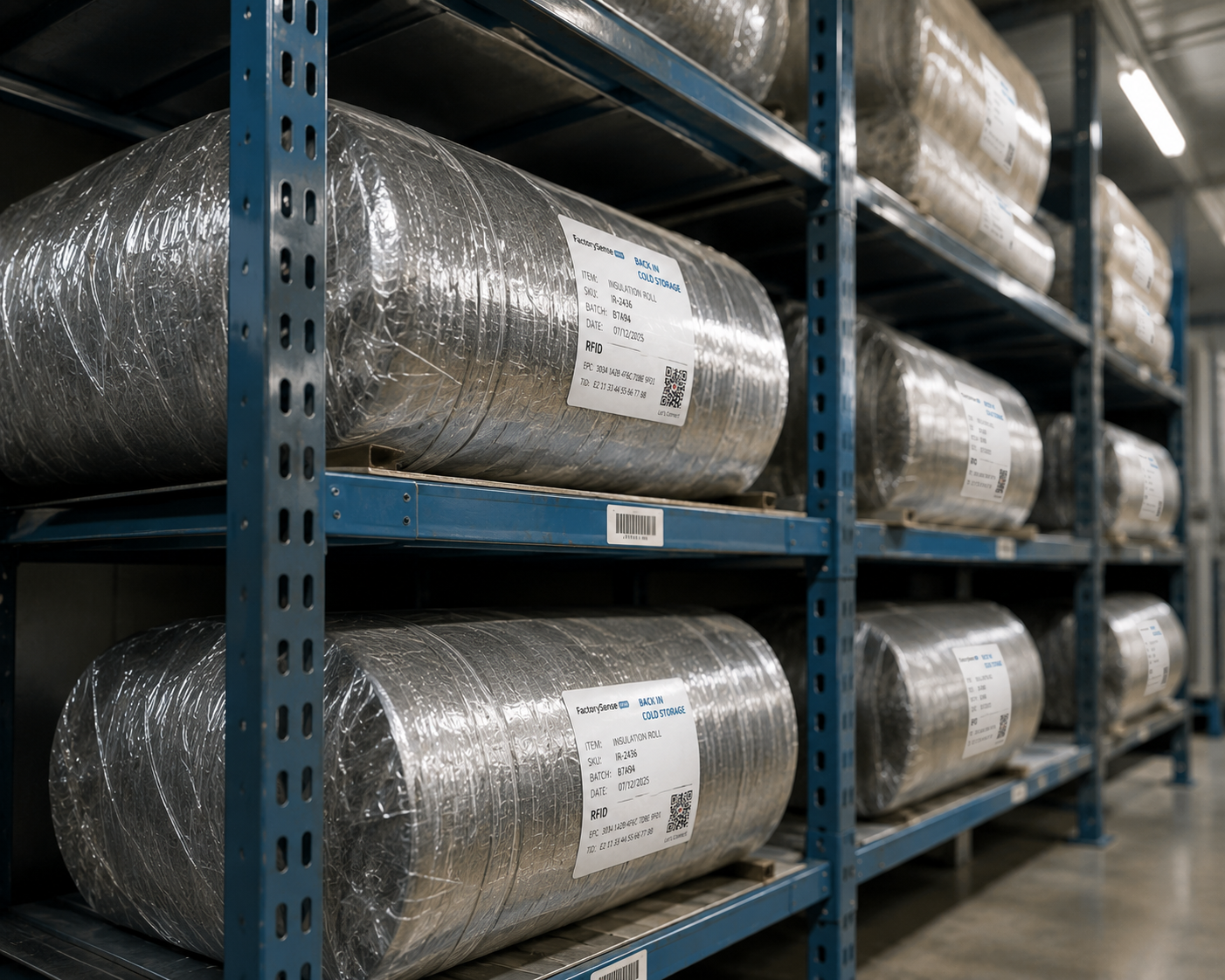

Replace manual out-time logs with fully automated tracking.
Move from sheets of paper, spreadsheets, or a combination of both to a fully integrated, fully automated out-time tracking system. FactorySense connects RFID capture, material tracking software, and your enterprise systems to maintain cumulative out-time and material history as work happens. Your team gets a vastly stronger material record, kept current for audit review every day instead of reconstructed when an audit approaches.
An audit-ready material record, maintained every day.
Manual out-time tracking asks people to record each removal and return, update a spreadsheet, and reconcile the two later. Every handoff creates another opportunity for a missed entry, lost piece of paper, or a disconnected record. FactorySense replaces that routine with automated event capture in and out of freezer zones, cumulative out-time calculation, and integrated material records. Identity, exposure history, kit genealogy, and enterprise transactions stay connected as material moves through production. Exceptions are surfaced for resolution, so your team can review the record as it stands instead of assembling evidence from separate logs.
Capture the movement. Calculate the time. Update the record.
RFID read points capture material removals and returns at the freezer boundary without requiring operators to write timestamps on paper or enter them into a spreadsheet. FactorySense.io distinguishes direction, filters nearby or repeated reads, and uses accepted events to calculate cumulative out-time under your approved material rules. Each cycle updates the material record and agreed enterprise transactions automatically. Returning a roll to storage does not erase accumulated out-time. Alerts and unresolved event gaps bring exceptions to your team before the next job.
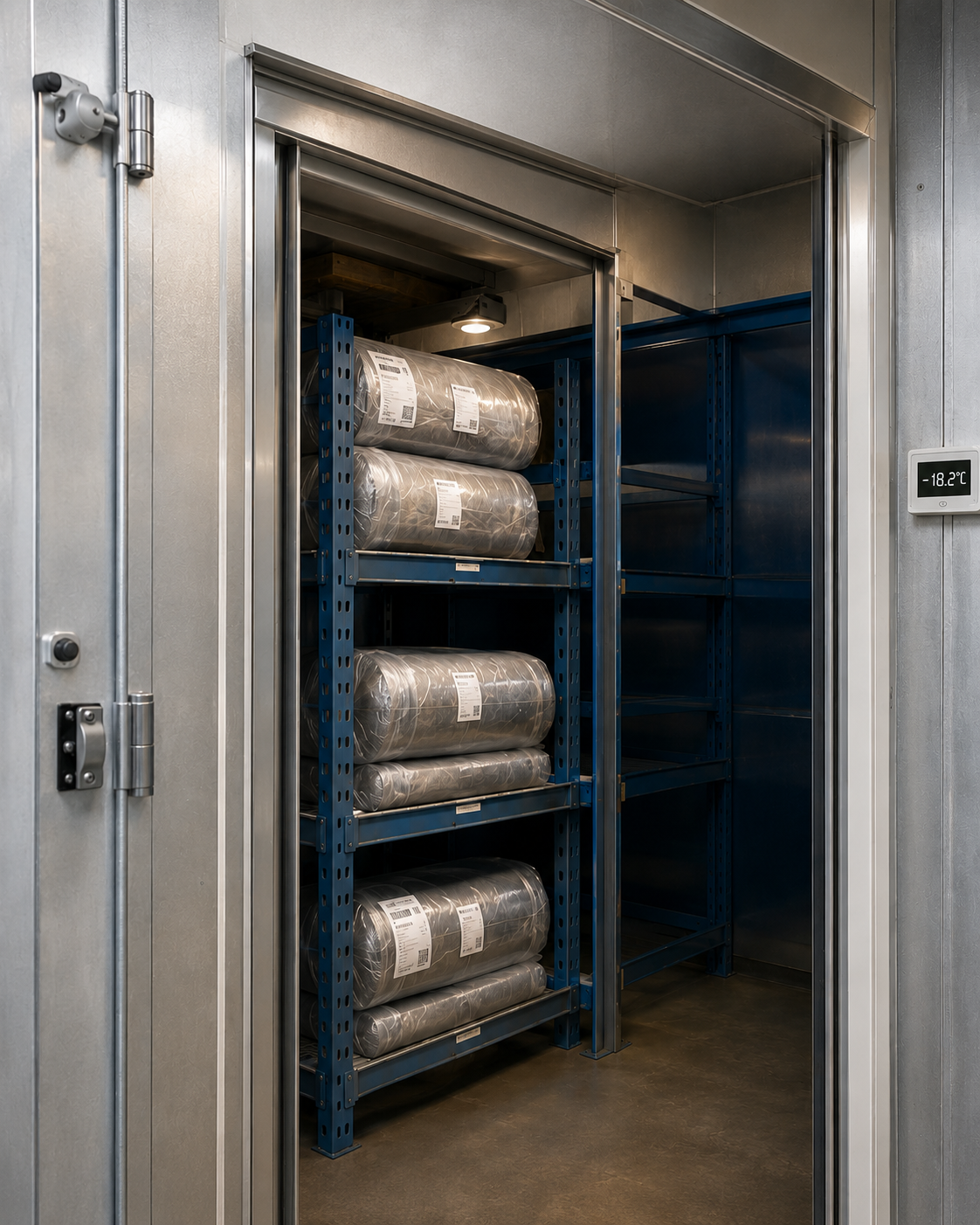
Preserve the record as a roll becomes a kit and a finished part.
Track the units your process needs to distinguish, with handoffs defined around receiving, controlled storage, and production.
Associate the RFID identity with the supplier lot, roll number, and relevant material record. Link certificates, storage requirements, and shelf-life information from the systems that own them, and flag missing information before the material enters production.
Capture direction at a controlled boundary and record accepted timestamps. Maintain cumulative exposure across repeated cycles, with exceptions for missed, duplicate, or ambiguous movements instead of silently assuming the material returned.
When a roll is split into kits, link each child identity to the parent material and its recorded history. Define how inherited out-time, remaining quantity, and subsequent kit movements are handled under your approved process.
Follow tagged kits, bags, trays, or travelers at selected production handoffs. Record which material was assigned to a job through a defined transaction. A tag read near a workstation does not by itself prove consumption or a completed process step.
Where temperature history is required, scope the sensors or existing monitoring-system integration separately. Standard identity tags do not measure temperature. Connect the relevant readings, alerts, and equipment records to the material-control workflow.
Show approaching time limits and gaps in the movement history to the responsible team. Your material specifications, quality procedures, and engineering decisions determine release, hold, or scrap. RFID supplies evidence for that decision.
A stronger material record, with results from one deployment.
This published case follows an advanced composites manufacturer from receipt through production. Its reported results are specific to that deployment.
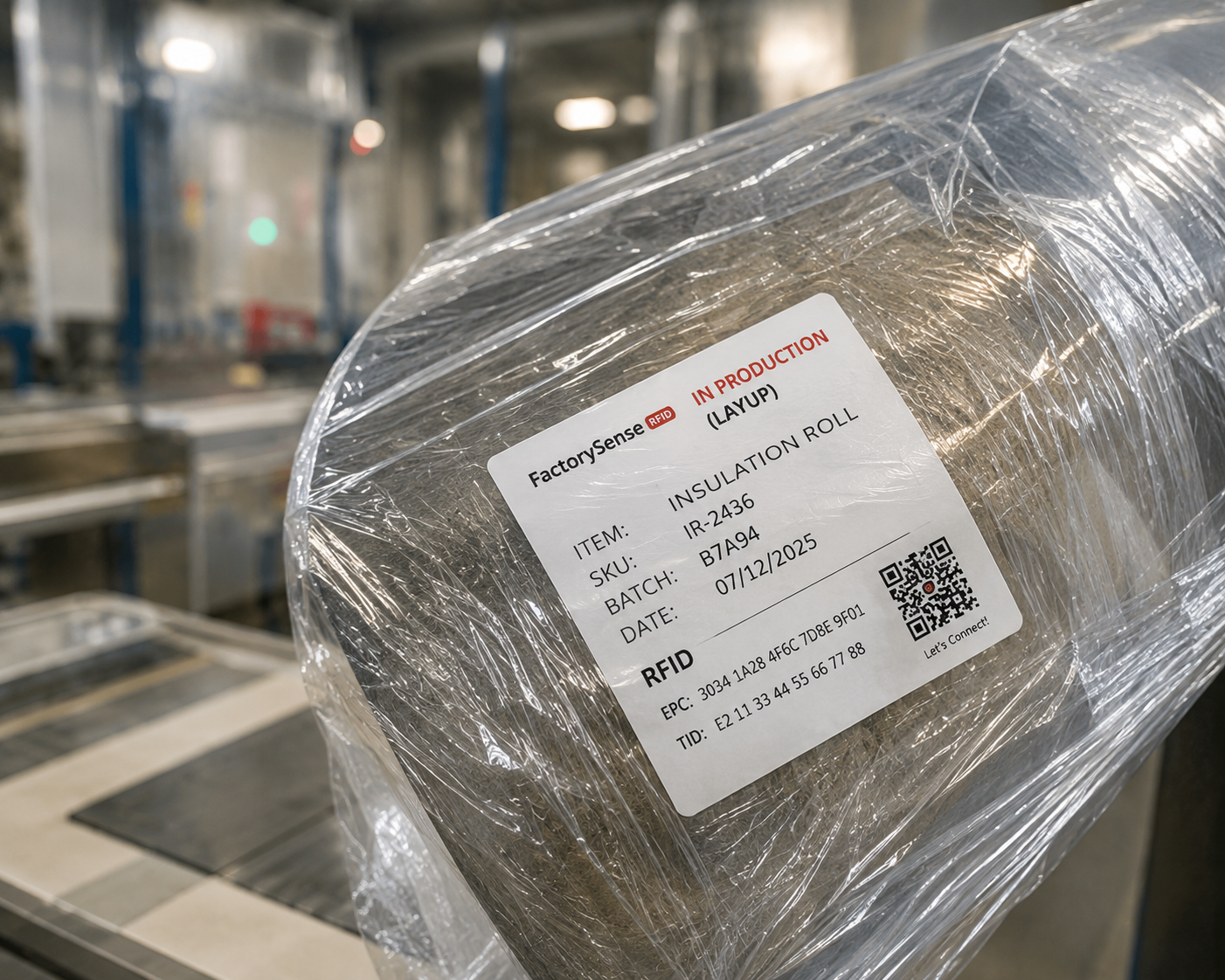
One integrated system, from freezer movement to enterprise record.
Automation delivers a stronger record when capture, calculation, and integration work together. FactorySense brings RF engineering, hardware, FactorySense.io software, integration, and deployment support into one program. We connect material identities, cumulative out-time, and accepted events to your ERP, MES, and quality records, with interface scope agreed with each system owner. Those systems continue to own production orders, specifications, and release decisions. Failed updates are surfaced and recovered, keeping the material history connected without routine reentry or reconciliation across separate logs.
Validate the automated record, then expand.
Start with one material workflow. Prove automatic capture, cumulative out-time calculations, and integrated updates against your approved control process before extending the system.
Define the control process
Map one material family from receiving through use. Agree on the tracking unit, authoritative records, exposure rules, kit relationships, and the exceptions operators and quality teams need to resolve.
Test tags and read points
Trial tags on actual packaging, carriers, and materials. Test freezer transitions, nearby stock, shielding, and operator movement. Retain barcode or manual verification where an automated event cannot be established reliably.
Validate the complete record
Compare captured events with the approved control process over repeated removals, returns, cutting, and partial use. Test inherited history, missed events, alerts, and acknowledged enterprise updates before relying on the automated record.
Measure and support the rollout
Assess search effort, record completeness, manual reconciliation, and the time required to investigate exceptions. Agree on training, tag replacement, and support before extending the system to more materials or production areas.
Composite material tracking questions.
The right design follows your material specifications, handling process, and existing production systems.
How does automated prepreg out-time tracking replace paper and spreadsheets?+
RFID readers identify a tagged roll, kit, or carrier at defined freezer removal and return points. FactorySense.io uses accepted timestamps to calculate cumulative out-time under your material rules, update the material history, and exchange agreed transactions with your enterprise systems. Operators no longer need to record routine freezer timestamps on paper or reenter them into spreadsheets. Direction, repeated reads, and missing events are handled in the system, with exceptions surfaced for review.
Does returning material to the freezer reset its out-time?+
No. Returning material to controlled storage does not erase accumulated out-time. How an exposure interval closes and how remaining life is calculated depend on the material specification and your approved handling procedures.
Does every ply need an RFID tag?+
Usually not. A roll, sealed kit, bag, tray, or traveler may be the right tracking unit. If a roll becomes several kits, parent-to-child records preserve the material identity and inherited history. Tag placement should be tested and must fit your handling and contamination controls.
Can an RFID tag monitor temperature or confirm material quality?+
A standard identity tag does not measure temperature or determine material quality. Temperature monitoring needs an appropriate sensor or integration with an existing monitoring system. Material specifications, quality procedures, and engineering disposition remain authoritative for whether material can be used.
Can this work with our ERP, MES, and quality systems?+
Yes, where the relevant interfaces support the agreed exchanges. FactorySense works with system owners to map material, lot, kit, and work-order identities, define accepted transactions, and plan recovery for failed updates. Integration scope is confirmed before rollout.
How does automated out-time tracking support audit readiness?+
The material record is maintained as operations happen, rather than assembled just before an audit. Material identity, accepted removal and return events, cumulative out-time, kit relationships, and agreed enterprise transactions remain connected for review. Your team can investigate surfaced exceptions and review the history against your approved material controls. Audit readiness comes from a continuously maintained record and a validated operating process, with quality and release decisions remaining under your approved procedures.
Turn manual out-time tracking into a continuously maintained record.
Show us the paper logs, spreadsheets, and handoffs your team relies on today. We'll help define a fully automated, integrated workflow that keeps material history current and ready for review.