
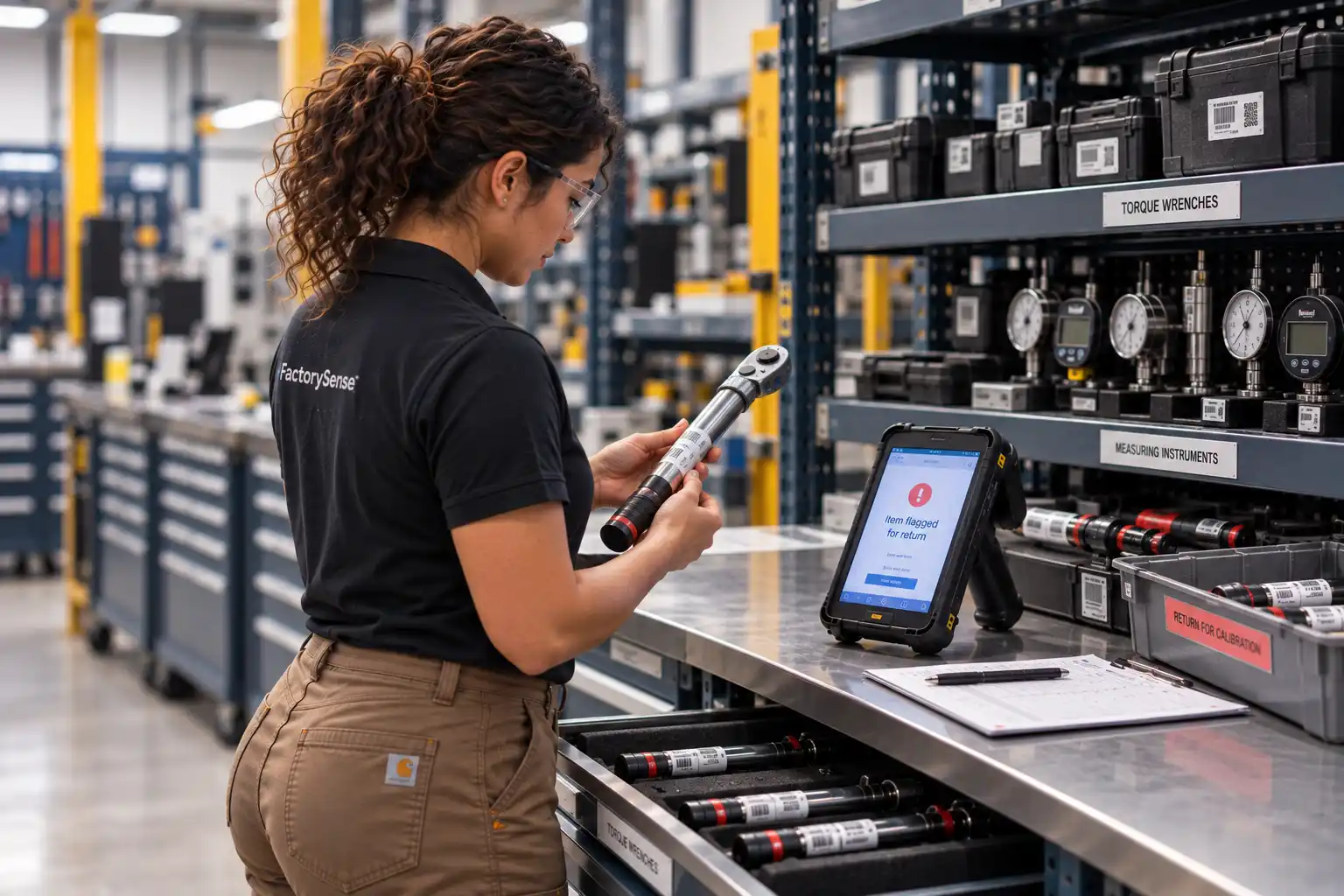

RFID calibrated tool management that keeps records connected.
Find the tool, check its status and keep its history connected. FactorySense links RFID tool tracking with the calibration records and quality procedures your team already uses, bringing location, custody and approved status into the same workflow.
Knowing where a tool is does not tell you whether it is ready to use.
A gauge or torque tool may be available on the floor while its calibration is overdue, its certificate is difficult to find or its custody record is incomplete. Teams then spend time searching, checking spreadsheets and reconciling records. RFID calibrated tool management links a durable tool identity to observed location and the authoritative calibration record. It supports the decision about which tool can be issued, serviced or returned, with exceptions handled through the agreed quality process.
Keep physical movement and calibration status connected.
RFID identifies the tool and records selected movements. Your calibration system supplies the approved status, due date and certificate history. Together, those records help your team decide whether the tool is ready to issue, due for service or restricted under your quality procedures.
Associate the tag with the tool's identifier, type, serial number and relevant record. Plan tag placement and replacement so the relationship remains reliable over the tool's service life.
Confirm movement through tool cribs, service areas and selected points of use. Record issue and return when the workflow supports it, and retain deliberate operator confirmation where required.
Bring due dates, status and certificate references into the operator's workflow from the authoritative source. Define record ownership and how updates reach the tracking application.
Surface tools approaching a due date, overdue tools and status conflicts for review. Quarantine, release and use restrictions must follow the customer's approved procedures and system controls.
Connect movement and custody history with calibration or maintenance activity. Preserve traceability for audits without implying that location data itself proves compliance.
Map tools and records to the existing calibration, EAM or ERP system. Reconcile identifiers, duplicates and incomplete records before moving operational workflows to the new system.

How RFID supports quality and traceability
A read history shows where a quality problem actually entered the chain. This guide covers receiving checks, kitting, shelf life and calibration windows, and why that record matters when an AS9100 or FDA auditor asks what happened to a controlled item.
Check status at the moment of issue or return.
When a technician picks up or returns a torque wrench or gauge, the reader identifies that exact tool and the application shows its calibration status from your system of record. If it's due or overdue, your procedure decides what happens next, whether that's a warning, a hold or a trip to the calibration bin. The check happens right at the counter, fully automatically, without a human in the loop, and updated directly into your ERP or tool management system. No more checking spreadsheets after the fact.
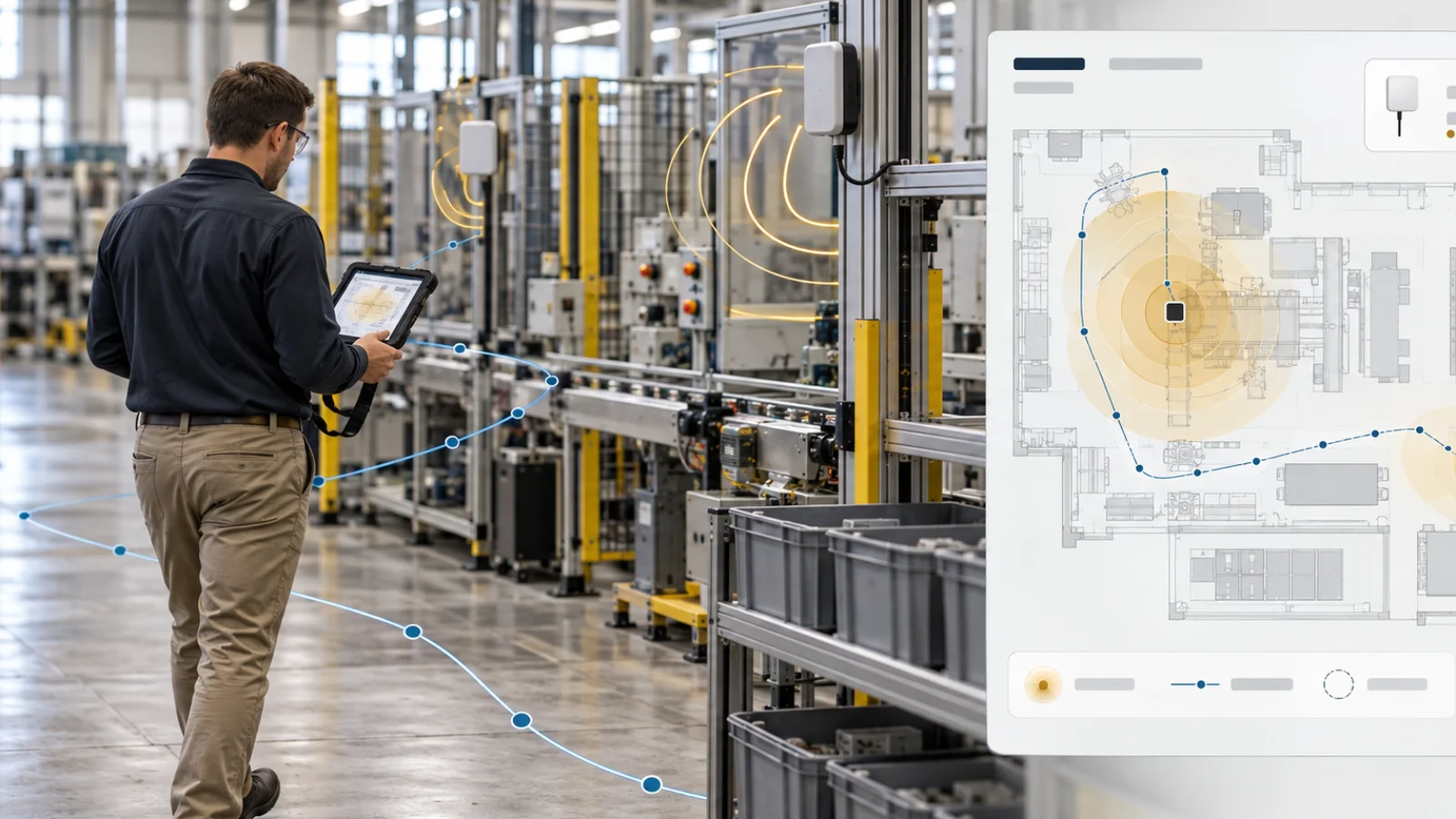
Start with the controls your quality team already depends on.
A useful pilot validates the record and the physical workflow together.
Define status and ownership
Agree which system owns calibration status, who can change it and how a tool becomes restricted or released. Identify the issue, return and service transitions that need tracking.
Validate capture and identity
Test tags on representative tools, including metal surfaces and small instruments. Establish how a tool is commissioned, replaced or handled when its tag cannot be read.
Test the decision at issue
Confirm that operators see the correct status at the relevant moment. Test overdue tools, missing certificates, conflicting records and offline operation with the quality and operations teams.
Review and expand
Measure retrieval effort, record reconciliation and exception workload. Confirm the audit trail and support procedures before expanding to more tools or locations.
Support calibration control without confusing detection with measurement.
RFID does not calibrate an instrument or determine whether it is within tolerance. It helps identify and locate the tool and connect it to an approved record. A status warning is different from an enforced interlock, and either must be specified and tested. For general tool-crib inventory, the emphasis may be stock, custody and return. For calibrated tools, the additional requirement is reliable linkage to calibration status, certificates and release procedures.
Calibrated tool tracking questions
Practical answers for planning the workflow.
Can RFID tell whether a tool is calibrated?+
RFID identifies the tool; your calibration system establishes its status. FactorySense can show that approved status when the tool is found, issued or returned. It does not measure the tool's accuracy or perform calibration.
Can we retain our calibration software?+
Often, yes. We review the interfaces your calibration or quality system supports, which records it owns and how current the status must be at issue or return. The integration depends on the system version, access permissions and your approved procedures.
Will this automatically make us compliant?+
No. RFID can improve visibility and traceability, but compliance depends on the applicable requirements, procedures, records and controls. Acceptance testing should include the quality team's actual workflow.
What happens when a tool is overdue or the system is offline?+
We agree on the response with your quality team before deployment. An overdue tool may trigger a warning, restricted issue or quarantine. Offline work may require a controlled manual check. An automatic hold is a separate control that must be specified and tested, and stale status should not be treated as approval to use a tool.
Let's discuss how your team manages calibrated tools.
Tell us where tools are issued, how calibration records are maintained, and what slows retrieval or review. We can help define a practical tracking and control workflow.