
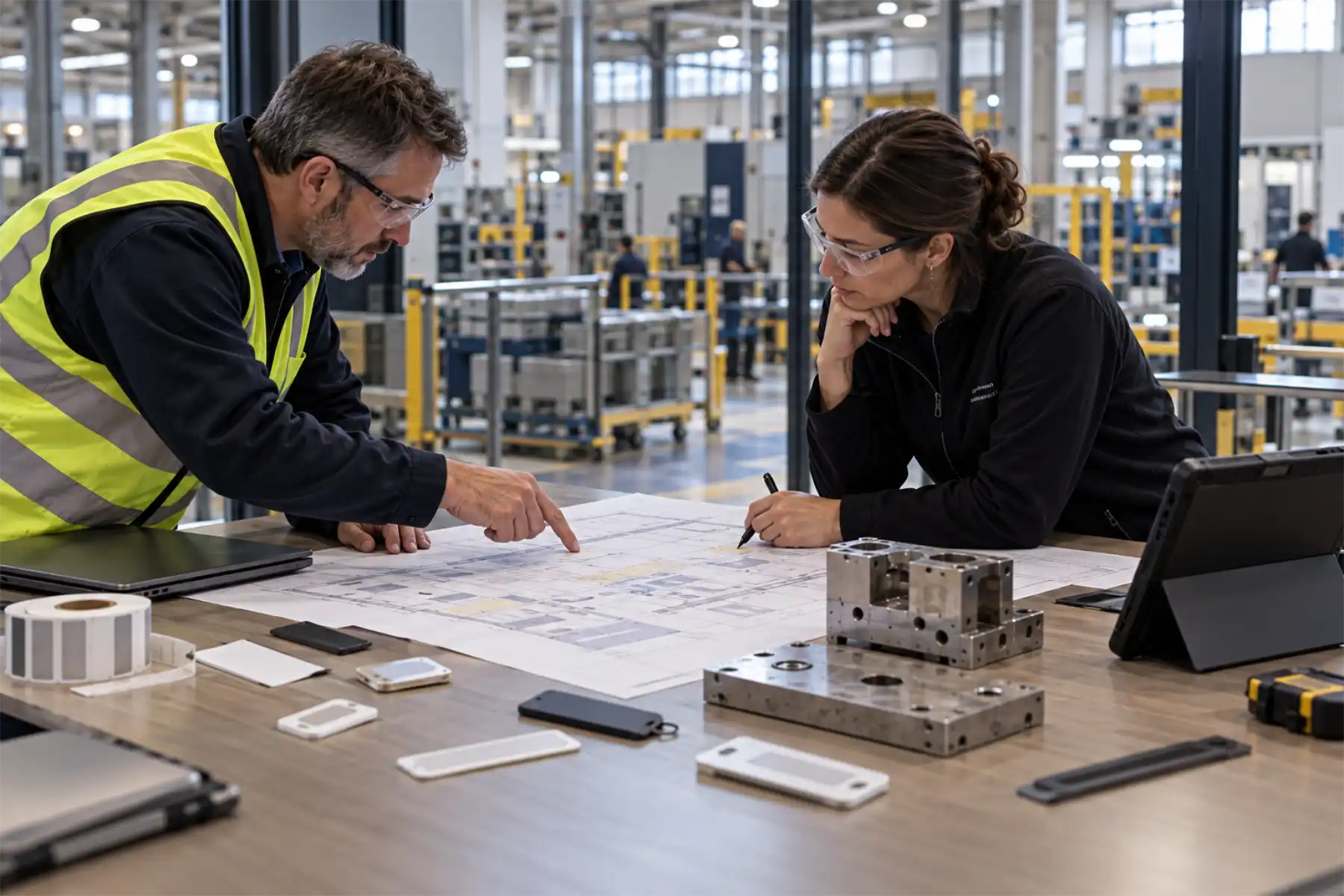

RFID consulting with a clear path to production.
Whether you're planning a new RFID system or improving one that isn't performing, FactorySense helps you decide what to track, what will work in your facility, and how to connect it to your existing systems. Our advice draws on hands-on experience with RF engineering, software, integration and deployment.
We start with the problem your operation needs to solve, then fit the best technology to your needs.
We start with the information you're missing: a work order stuck between operations, a tool nobody can find at the workstation, or material that arrived on the dock but never made it into the system. We define what needs to be captured, the business impact, and the accuracy required before choosing tags, readers, software or engaging in technology or system design.
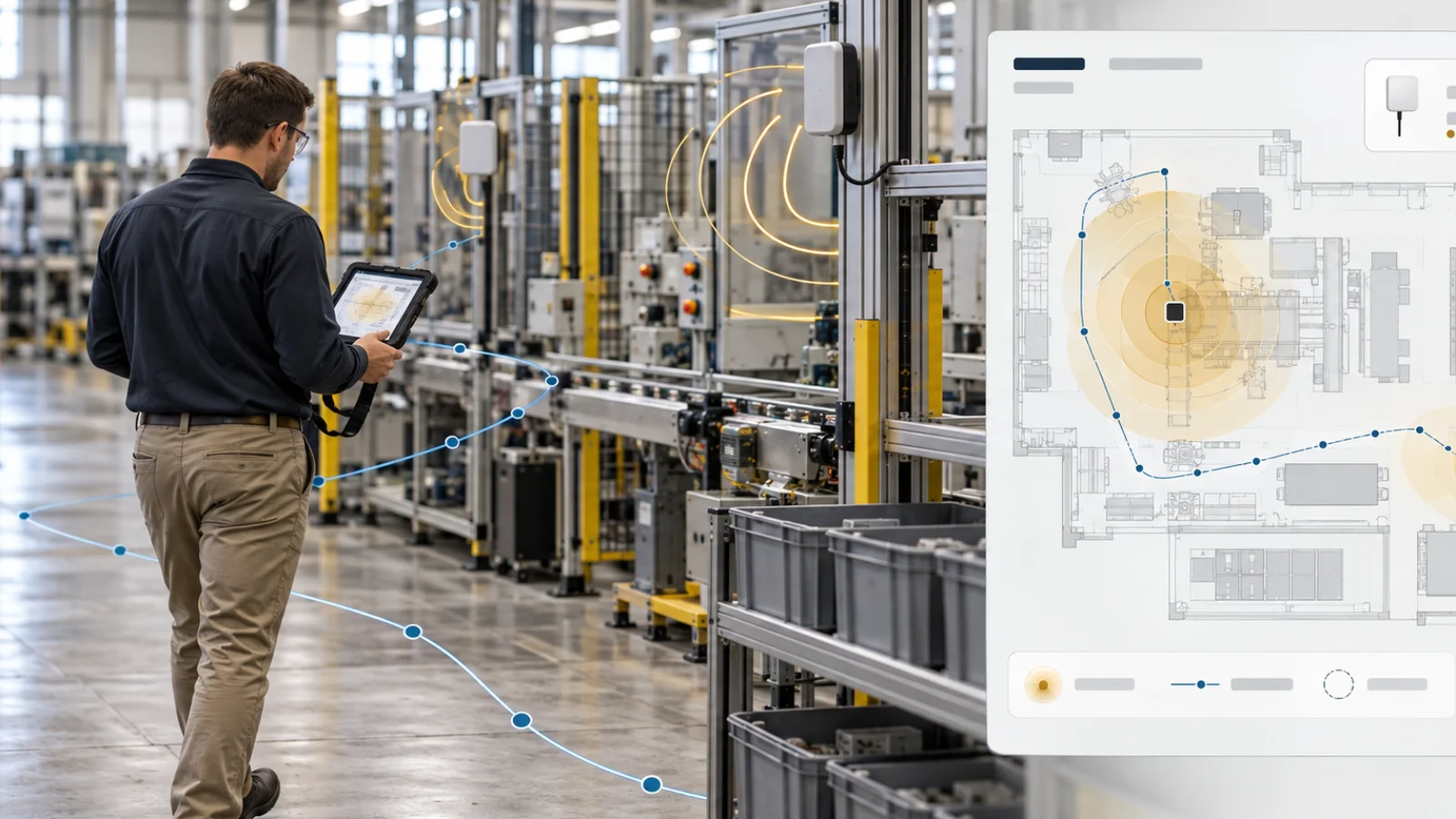

Decide what to track, what to test and how to deploy.
Our RFID consulting services help manufacturing, aerospace, defense and other industrial teams reduce uncertainty before committing capital. We define requirements, validate feasibility, select technology, plan integration and recover systems that aren't performing.
RFID observations become operational events and enterprise records.
Work in process
Decide which movements between operations should update a job's status, and how those updates reach your MES or ERP.
RFID observations become operational events and enterprise records.
Assets and tooling
Determine whether your team needs to identify an asset, confirm its presence in a zone or locate it precisely. Test tags on the actual assets against that need.
RFID observations become operational events and enterprise records.
Inventory and supply chain
Find where receiving, staging, consumption or replenishment falls out of step with inventory records, and decide which movements should update them.
Make the decisions that determine whether the system works.
A reliable RFID system connects what happens on the floor with the right software action and system update. We test recommendations against your workflow, accuracy needs and business goals.
Rank opportunities by the operating problem they solve, business impact, technical feasibility and how ready your organization is.
Compare tags, readers, RTLS, software and vendors against your application, infrastructure limits and lifecycle cost.
Test real assets, materials, tag placement, read points, interference and unwanted reads in your actual operating environment.
Define the business events, how each tag maps to a record, exception handling, security and the updates that reach your ERP, MES, WMS, EAM or CMMS.
Tie the proposed system to measurable costs like labor, search time, lost assets, throughput, inventory variance, compliance effort and production delays.
Set measurable pass or fail criteria for a pilot, or untangle tag, RF, event-logic, integration and workflow problems in a system that isn't working.
Choose the technology that fits your process.
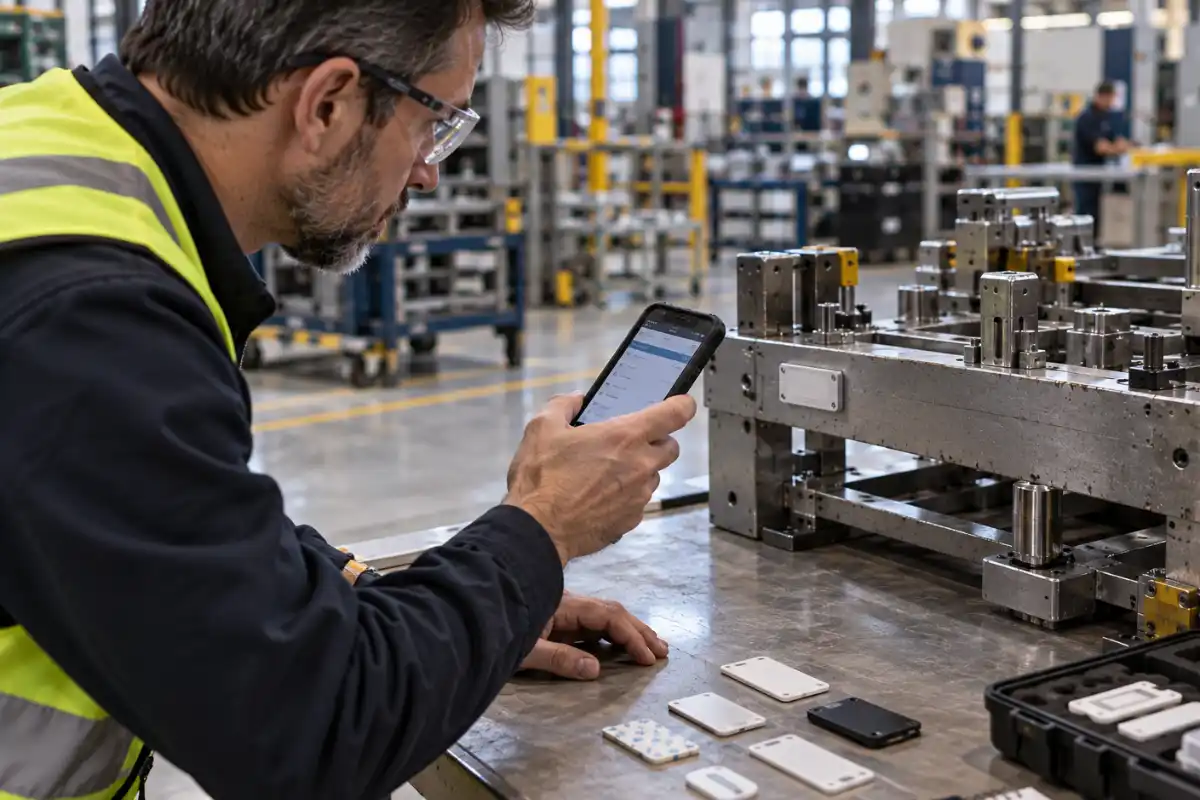
We compare passive UHF RFID, BLE, UWB, GPS, NFC, barcode, vision and hybrid approaches against what you need to capture. Our recommendations and deployment plans account for location precision, movement, environmental conditions, and the RFID integrations into your business systems.
RFID observations become operational events and enterprise records.
Focused advisory services
Review a use case, design, vendor proposal or technical question. Receive findings, risks and recommended next steps to support your decision.
RFID observations become operational events and enterprise records.
RFID site assessment
Assess your workflow, RF conditions and actual assets on site. Receive test findings, candidate read points and infrastructure requirements to decide what to validate next.
RFID observations become operational events and enterprise records.
Roadmap and pilot design
Define requirements, architecture, ROI assumptions and integration needs. Receive a deployment roadmap and pilot acceptance criteria to guide your investment decision.
RFID observations become operational events and enterprise records.
Program strategy and RFID recovery
Plan a multi-site rollout or diagnose an underperforming deployment. Receive standards and ownership recommendations for expansion, or prioritized corrective actions for recovery.
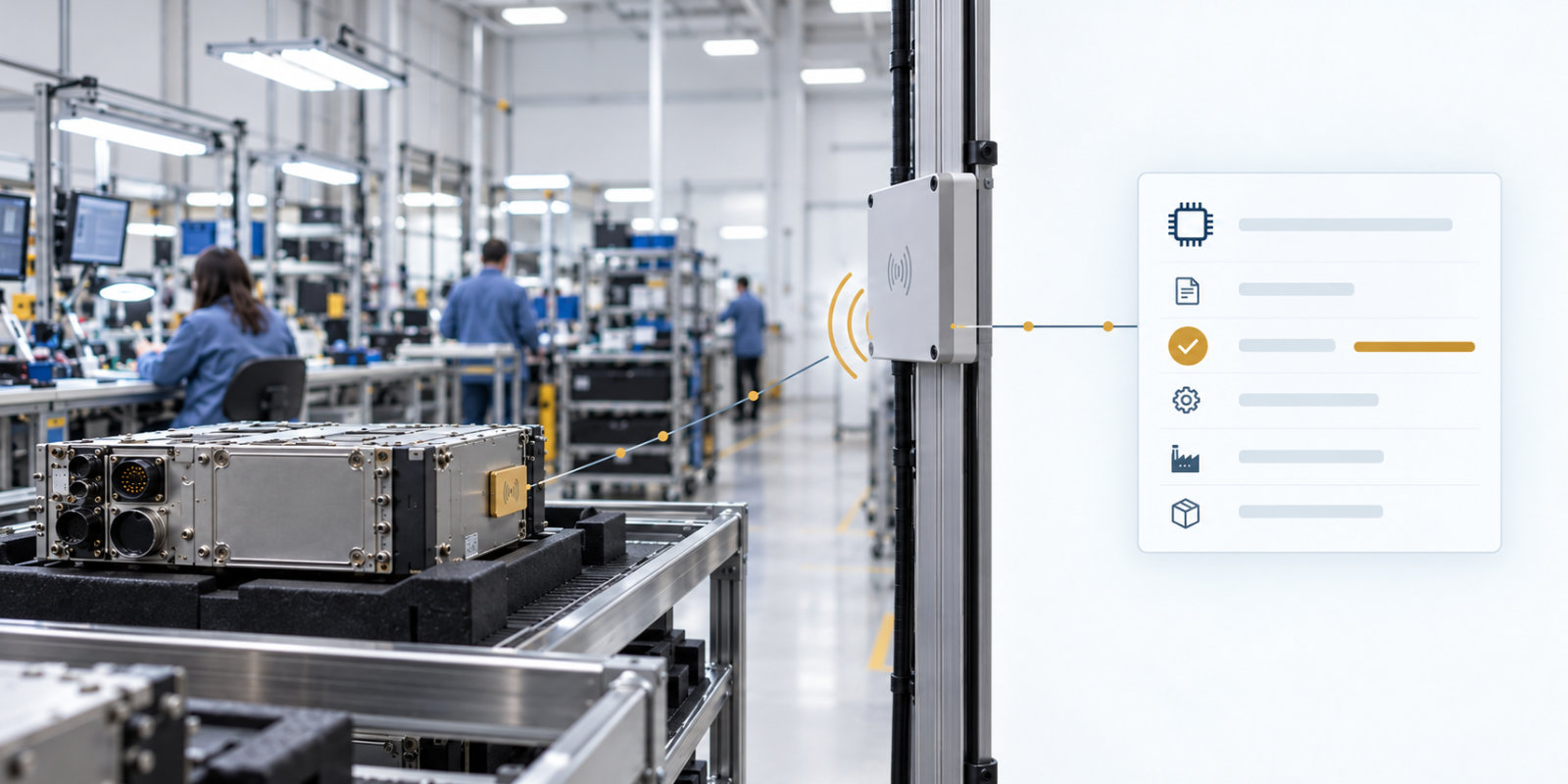
Recovering an RFID WIP system the operation could trust.
Honeywell Aerospace brought FactorySense in to assess an unreliable active RFID deployment. We redesigned tag selection, read points, event logic and integration around passive RFID. Battery maintenance went away, confidence in WIP data came back, and the same infrastructure later expanded to carts and tooling.
“We have seen substantial cost savings since switching to FactorySense from our previous RFID solution.”
Adam Overbo, Materials Manager, Honeywell Aerospace
One accountable team from RFID consulting through implementation.
Our consulting is grounded in delivery. The same team can take the recommended architecture through RF engineering, software, integration, installation, commissioning, training and support. Engage us for independent advice, or continue with us through RFID implementation.
Discover
Define the operating problem, stakeholders, constraints, and measurable value at stake.
Assess
Evaluate the physical conditions, technology fit, integration dependencies, and recommended architecture.
Prove
Test the complete workflow against agreed acceptance criteria, including unintended reads, exceptions, and enterprise updates.
Plan and deliver
Provide the roadmap, responsibilities, costs, and next steps. Continue through implementation and support when continuity is required.
What clients usually want to know before engaging an RFID consultant
Our engagement scope can range from a focused review to a broader program. RFID consulting does not require you to purchase hardware, software, or implementation from FactorySense.
When should we bring in an RFID consultant?+
Bring in an RFID consultant before selecting tags, readers or software if you have not yet defined the workflow, location accuracy or system updates you need. Early advice helps you validate the approach before committing to equipment and design choices.
Can FactorySense evaluate an existing RFID design or troubled deployment?+
Yes. We assess tags, read points, RF behavior, reader configuration, event logic, integration, and operating workflow to identify the failure and prioritize corrective actions.
Does FactorySense only recommend passive RFID?+
No. The requirement comes first. Passive RFID may be appropriate for identification, controlled transitions, and high-volume tagging, while BLE, UWB, GPS, NFC, barcode, vision, or a hybrid may fit other location and workflow requirements better.
What does an RFID site assessment include?+
Typically workflow review, RF and environmental observations, asset and tag testing, candidate read points, unwanted-read risks, infrastructure requirements, and validation criteria. Scope depends on the application.
How do you separate a tag read from a business event?+
Not all tag reads are translated into ERP events that are sent to your ERP system. FactorySense uses location, timing, repeated observations, direction, process rules, and other context to decide whether the observation represents a meaningful event such as moved, received, issued, staged, or completed.
Can FactorySense handle integration as part of consulting?+
Yes. We can plan ERP, MES, WMS, EAM, CMMS, API and shop-floor integration alongside the RF and software design. That defines how a validated movement or action becomes the right update in your existing systems.
What should a pilot prove?+
A useful pilot should prove the real tag on the real asset, read behavior at representative process points, unwanted-read controls, event logic, exception handling, and the system-of-record update. Demonstrating that a tag can be read in a lab is not enough.
Do you provide RFID implementation after consulting?+
Yes. FactorySense can carry the plan through hardware selection and supply, application logic, integration, installation, commissioning, validation, training, support and scale-up.
How do you estimate ROI before deployment?+
We start with measurable costs such as search time, missed updates, inventory variance, production delays, rework, lost tooling and manual audit labor. We compare the expected improvement with hardware, software, integration, deployment and ongoing operating costs, with assumptions made explicit.
How much does RFID consulting cost?+
It depends on scope. A focused review of a design or vendor proposal is the smallest engagement, a site assessment adds on-site testing, and roadmap, pilot design or program recovery work takes longer. We scope each engagement after an initial conversation so you know the cost before work starts, and consulting never requires buying hardware or software from FactorySense.
What does an RFID implementation involve?+
Most RFID implementations move through five stages: confirm the requirements, validate tags and read points on site, configure the event logic and software, integrate with your ERP, MES or WMS, then install, commission and train. A pilot on one workflow usually comes before scaling across a facility.
Let’s discuss what your RFID program needs to accomplish.
Tell us what you need to track, which operating problem you want to solve, and what you’ve tried so far. We’ll help clarify the requirements and walk you through next steps.