Northrop Grumman Space Park: RFID Asset Visibility Across 46 Buildings

- The Space Park deployment covered a 1.5-million-square-foot campus spanning 46 buildings, where manual asset location had become difficult to sustain.
- FactorySense combined fixed and handheld RFID, standardized tagging and enterprise integration so teams could locate assets and review movement history across the campus.
- The deployment was designed around aerospace operating constraints, including metal-dense environments, controlled areas and the need for auditable asset movement.
A location problem becomes very different at campus scale
Northrop Grumman's Space Park campus in Redondo Beach spans more than 1.5 million square feet across 46 buildings. At that scale, an asset can be on site and still be effectively unavailable because the people who need it cannot determine where it is quickly enough.
The operational cost is not limited to replacement purchases. Search time delays work, equipment sits idle while another team looks for it, and employees build informal knowledge about where things tend to be rather than relying on a common record. In an aerospace environment, movement history and controlled-area requirements add another layer to the problem.
The deployment started with the physical campus
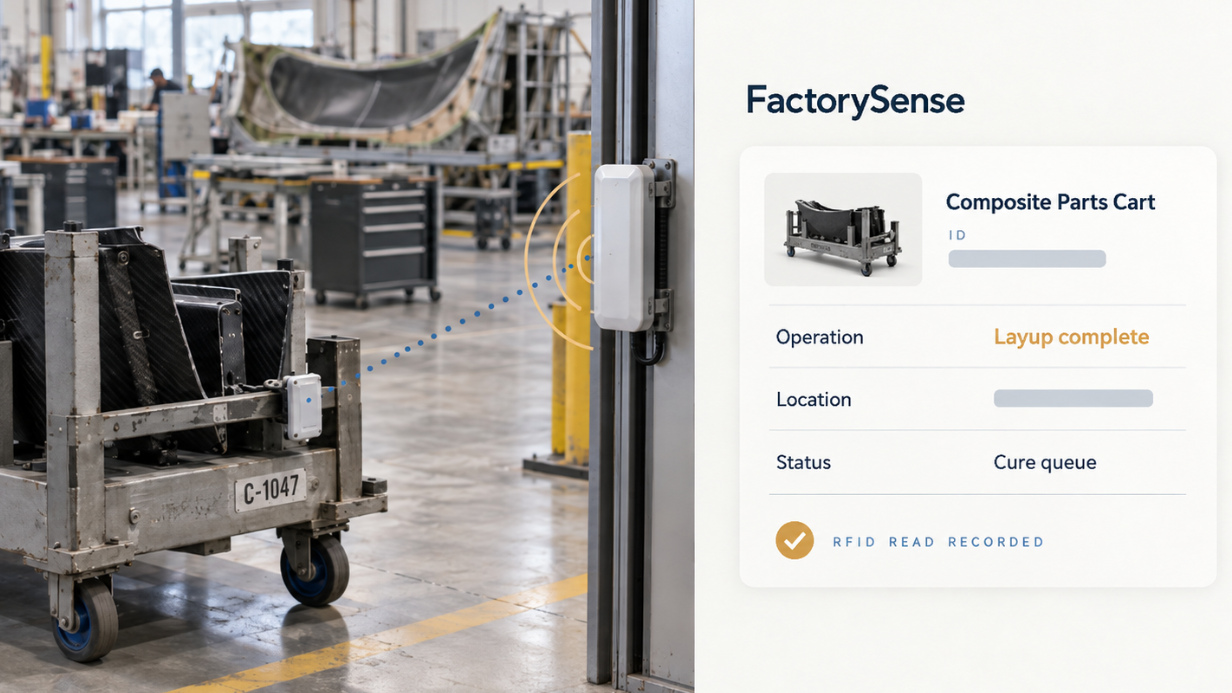
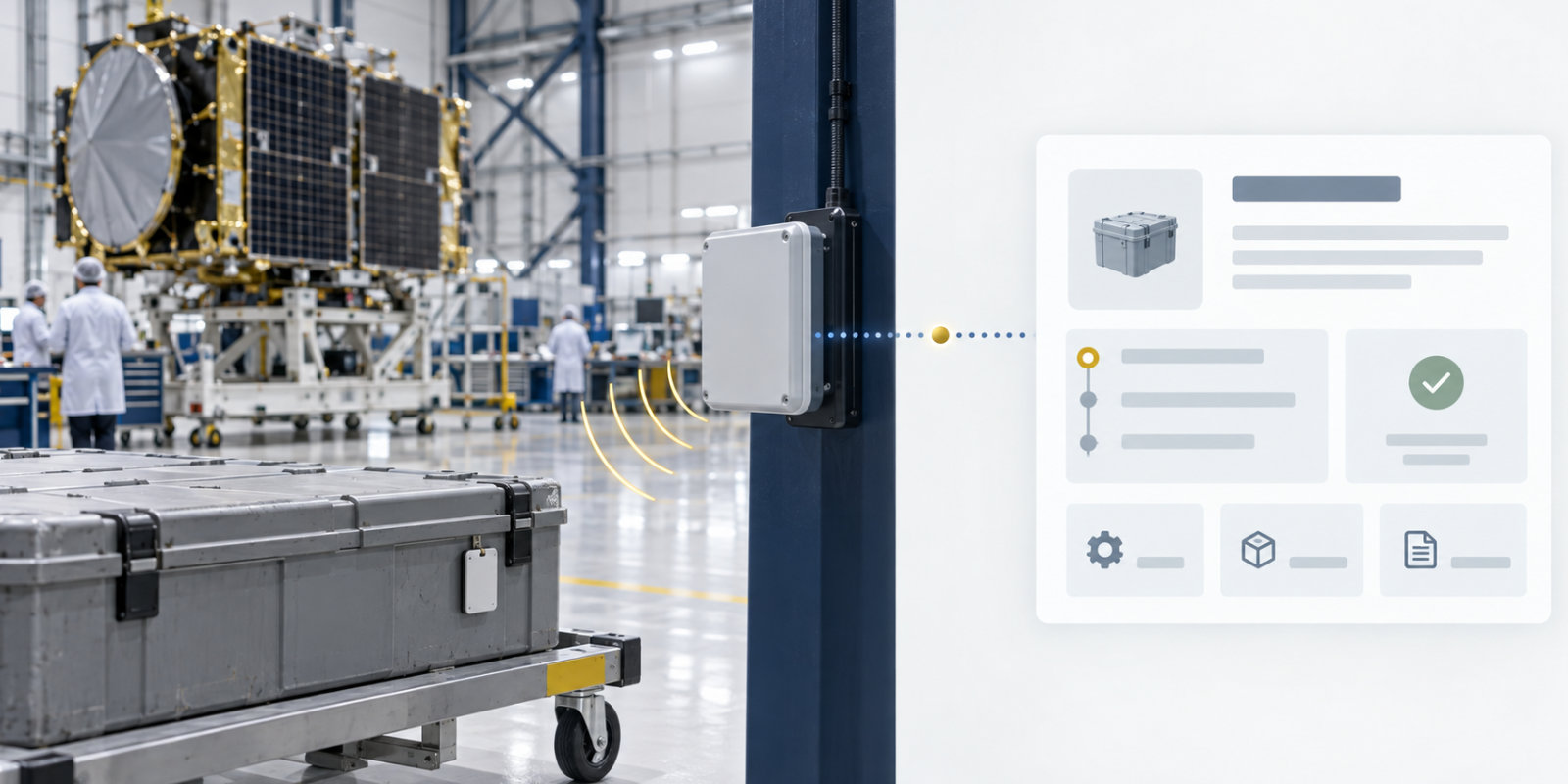
FactorySense began with the site itself: how assets moved between buildings, which transitions mattered, where fixed infrastructure could be installed and where handheld search would still be necessary. The result was not a single type of read point repeated everywhere. It was a combination of fixed RFID infrastructure for controlled transitions and handheld readers for locating assets in areas where permanent coverage was not practical.
Tagging also had to account for the environment. Aerospace facilities contain metal equipment, dense work areas, labs, warehouses and other spaces where a tag that performs well in one location may perform poorly in another. FactorySense standardized the tag families and placement rules around the actual asset classes rather than treating the tag as a generic consumable.
RFID observations had to become useful asset records
The reader layer was connected to FactorySense software so an RFID observation could be resolved to a known asset, location and time. Teams could review current and historical observations, use handheld search when an item was not at an expected location, and receive alerts around defined movement conditions.
The system was also designed to connect with Northrop Grumman's existing enterprise workflows instead of creating a separate island of location data. That distinction is important in a deployment of this size. The value comes from making the physical state of the asset available to the systems and people already responsible for it.
What changed after deployment
Northrop Grumman reported materially lower search effort and fewer asset-loss problems after the system was deployed. The location history also gave operations and compliance teams a more reliable record of how assets moved through the campus.
The project was later recognized by RFID Journal as runner up in the 2024 award for Best Large-Scale Deployment of RFID, and FactorySense and Northrop Grumman presented the deployment jointly at RFID Journal LIVE! 2024. We discuss that recognition separately in our deployment award article.
What this deployment shows
Large-scale asset tracking does not require every square foot to be covered by fixed readers. It requires a deliberate model for where movement should be observed automatically, where handheld search fills the gaps, and how the resulting observations become part of the asset record.
Space Park is also a useful reminder that scale magnifies weak design decisions. Tag selection, reader placement, naming conventions and integration logic that are merely inconvenient in one room can become unmanageable across dozens of buildings. The deployment worked because those decisions were treated as one system rather than as separate hardware purchases.
How large was the Northrop Grumman RFID deployment?
The deployment covered Northrop Grumman's Space Park campus in Redondo Beach, California, spanning 46 buildings and more than 1.5 million square feet.
Did the system use only fixed RFID readers?
No. The design combined fixed RFID infrastructure at selected transitions with handheld readers for locating assets in areas where permanent reader coverage was not practical.
How was the RFID data used?
RFID observations were resolved to known assets, locations and times, giving teams current and historical movement information while supporting integration with existing enterprise workflows.
Schedule a complementary working session with an RFID professional to discuss your floor or yard, your systems of record, and where the visibility gap between them is costing you.
Book a session