The Scarce Resource in Industrial Modernization Is Becoming Execution


- Cost pressure is reinforcing modernization: 63% prioritize cost reduction, while only 10% plan to reduce logistics technology spending.
- Skills shortages and integration complexity suggest execution capacity is becoming a major constraint on technology adoption.
- Support outranks cost effectiveness among provider qualities, suggesting buyers increasingly value the probability of successful implementation.
AIM recently released its 2026-27 Logistics Pressures & Priorities Survey, based on responses from 270 end-user enterprises. I spent some time with the findings, and I think they reveal a few important points that business leaders seem to be struggling with.
According to the survey, sixty-three percent of respondents rank cost reduction as a high or top logistics priority. Yet only 10% plan to reduce logistics-related technology spending. Thirty-one percent plan to increase it, while approximately 60% expect spending to remain flat.
The obvious read is straightforward: modernization is increasingly part of the cost-reduction strategy, not something that competes with it. The more interesting finding, however, is what appears to be constraining that modernization.
Execution is becoming the scarce resource
Budget constraints remain the leading barrier to technology adoption, cited as challenging by 93% of respondents. But skills gaps and worker shortages follow at 88%, integration complexity at 83%, and change management at 78%. Only 21% describe justifying the business case as very challenging. Taken together, those numbers suggest that many companies may have more technology projects they can justify than they have the resources and expertise to execute well.
That matters because technology itself is increasingly abundant. There are mature options for automation, identification, sensing, enterprise software, and analytics, with a rapidly expanding universe of AI capabilities. The harder problem is assembling those technologies into a reliable operating system and integrating them into workflows to drive cost savings.
For business leaders, implementation capacity should increasingly be treated as a constraint alongside capital.
The categories matter less than the economic outcome
AIM found planned spending growth across the technology stack. Thirty-six percent of respondents plan to increase spending on AI and analytics, 34% on automation and material handling, 33% on operations systems such as ERP and WMS, and 30% on automatic identification and traceability technologies. In every category measured, planned increases outnumber decreases. While it's tempting to ask which technology is winning, I think that misses the point.
Businesses do not fundamentally need AI, RFID, automation or another software platform. They need to produce more with the same resources, reduce errors and labor requirements, improve asset utilization, create more accurate information, and make better decisions.
All of the technologies surveyed are becoming increasingly dependent on one another. Automation requires accurate information about state. Enterprise systems like SAP, Oracle, Infor, Solumina, AssetSmart, and the like require timely transactions. Analytics requires trustworthy operational data. AI requires an accurate representation of what is actually happening in the business.
The common denominator here is a drive to increase unit productivity. In other words, the value of the stack increasingly depends on the quality of the information moving between its layers.
AI makes physical-world data more important
According to the executives surveyed, AI and analytics lead planned spending increases. That raises a basic question: what does AI consume?
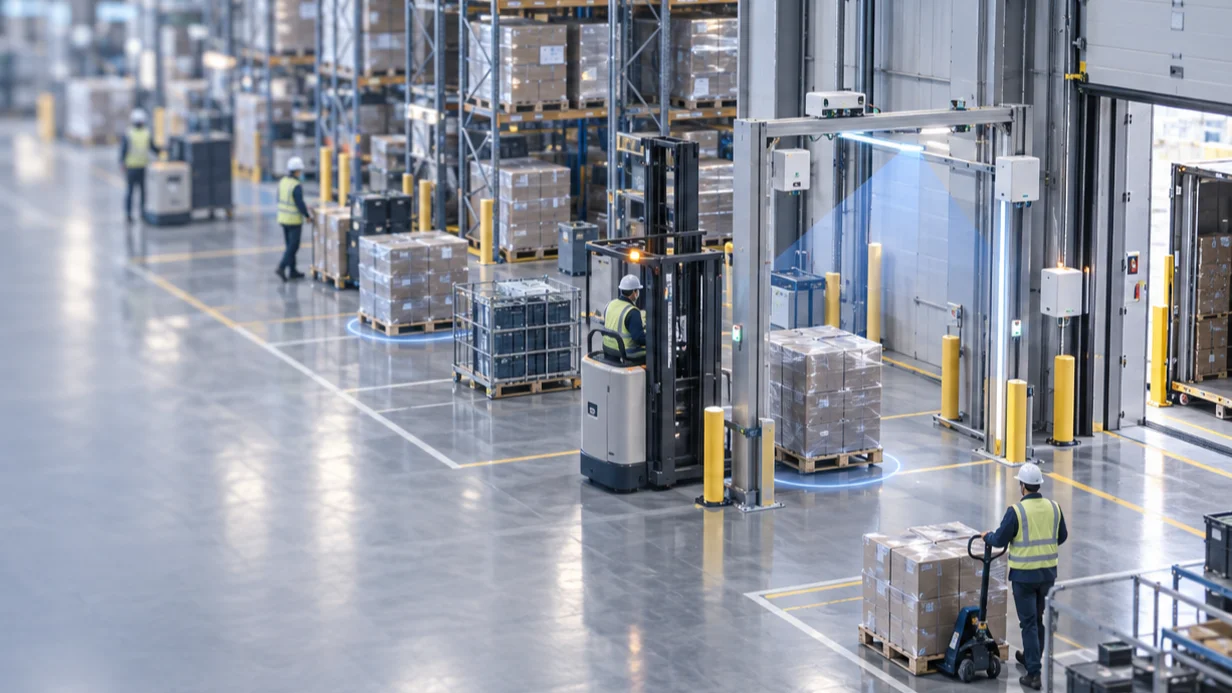
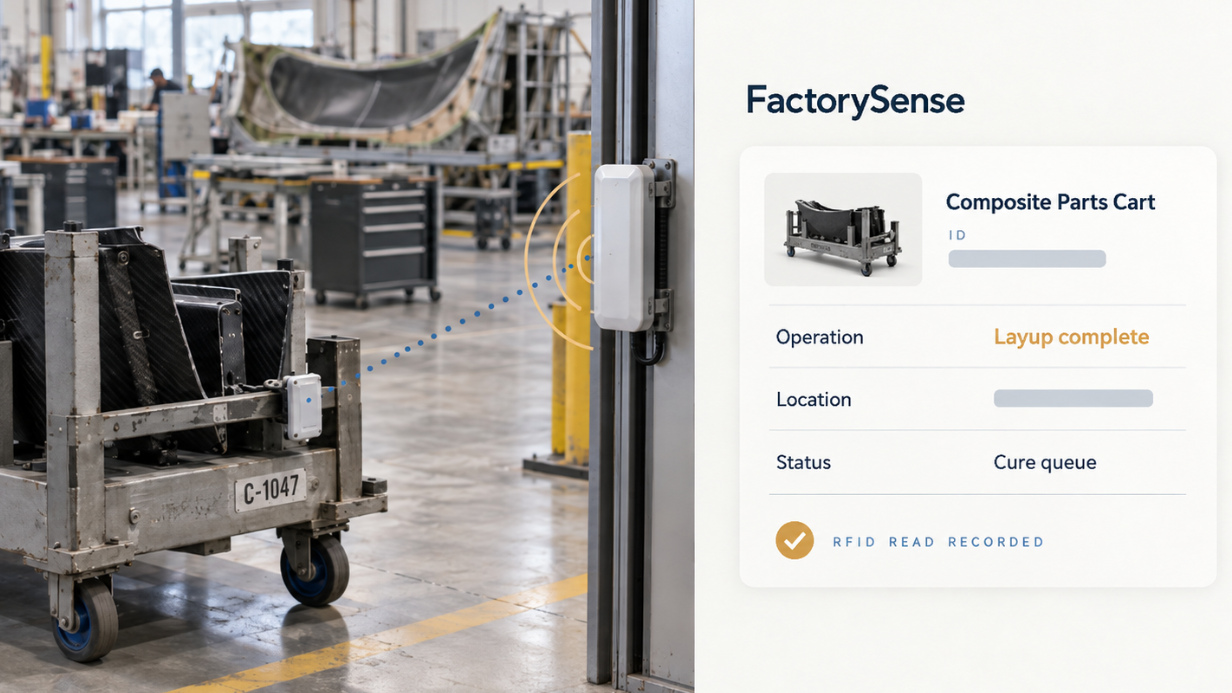
Data. And in industrial and logistics operations, much of that data ultimately originates with a physical event. Material arrived. A pallet moved. A tool changed custody. Work in process entered another operation. An inspection occurred. The enterprise can only reason about those events if it knows they happened.
That is why I think the industrial AI opportunity is partly a data-creation problem. AI cannot know that a pallet moved without being recorded or that work in process changed state while the ERP or MES is inaccurate and still shows the previous condition.
Physical observation → structured operational data → enterprise systems → analytics and AI.
As companies put more intelligence at the top of the technology stack, reliable information from the physical operation becomes more valuable, not less.
Customers are paying for probability of success
Support was the most valued solution-provider quality at 71%, ahead of cost effectiveness at 68%. More strikingly, 54% said superior service would strongly influence them to switch providers, compared with 46% for lower costs and 27% for better technology.
That is notable in a survey where cost reduction is the dominant operating priority. My interpretation is that buyers increasingly understand that purchase price and implementation cost are different things.
The true cost of a technology project includes internal engineering resources, integration, project management, testing, training, troubleshooting, delays, and the burden of coordinating suppliers. A cheaper product that consumes substantially more organizational effort and ultimately doesn't satisfy the needs of all stakeholders to drive productivity increases may not be the cheaper solution.
In short: businesses are not simply buying technology; they are buying a probability of achieving the intended operating result.
The larger takeaway
AIM's recent research indicates that most budgets remain relatively stable, and that companies are under pressure to reduce costs while continuing to modernize, with investment occurring across AI, automation, enterprise systems and identification technologies at the same time that organizations report constraints in skills, staffing and integration capacity.
All of this together suggests the bottleneck is moving. While access to technology is becoming easier, the ability to turn technology into a reliable operating capability is becoming more valuable.
For business leaders, that changes some key questions. Beyond cost, capability and ROI: What economic input are we trying to reduce? What output are we trying to increase? What information does the system require? Where does that information originate? What has to happen between purchase and production? What internal resources will implementation consume? And who is accountable for the complete result?
My biggest takeaway from AIM's survey is simple: the differentiator is increasingly not access to technology. It is the ability to execute it well.
Source: AIM 2026-27 Logistics Pressures & Priorities Survey. AIM surveyed 270 end-user enterprises in March and April 2026.
What did AIM's 2026-27 logistics survey find about technology spending?
About 60% of respondents expect technology spending to remain flat, 31% plan to increase it and 10% plan to decrease it. Every technology category measured had more planned increases than decreases.
What are the biggest barriers to logistics technology adoption?
AIM found budget constraints, skills gaps and worker shortages, integration complexity and change management among the most common barriers.
Why does this matter for AI investment?
AI and analytics led planned spending increases, but AI depends on reliable operational inputs. In physical operations, identification, sensing and event logic help turn movement and state changes into structured data that enterprise systems and AI can use.
Schedule a complementary working session with an RFID professional to discuss your floor or yard, your systems of record, and where the visibility gap between them is costing you.
Book a session