
RFID Tracking in Warehouse Operations: Improving Visibility and Supply Chain Efficiency

RFID Tracking in Warehouse Operations: Improving Visibility and Supply Chain Efficiency
Key Takeaways
- RFID tracking improves warehouse inventory visibility and reduces manual scanning requirements.
- Real-time warehouse tracking helps manufacturers optimize labor efficiency, inventory accuracy, and order fulfillment.
- RFID-enabled warehouse systems support faster supply chain operations and improved customer service.
Warehouse Operations Need Better Visibility
Warehouse operations are becoming increasingly complex.
Manufacturers and distributors must manage larger inventories, faster customer expectations, labor shortages, and growing pressure for same-day or next-day fulfillment. At the same time, supply chains remain vulnerable to disruptions caused by inaccurate inventory data, delayed shipments, and inefficient workflows.
Traditional warehouse tracking methods often create bottlenecks that reduce productivity and increase costs. Manual inventory counts, barcode scanning delays, misplaced materials, and outdated stock records can all negatively affect warehouse performance and downstream supply chain operations.
RFID tracking solves these challenges by delivering real-time visibility into inventory movement and warehouse activity.
Unlike barcode systems, which require direct line-of-sight and manual scans, RFID systems automatically collect data as tagged items move through receiving, storage, production staging, and shipping.
That gives manufacturers and logistics teams immediate visibility into what they have, where it is, and where it is going.
Warehouse operations supported by RFID technology improve inventory management, reduce labor-intensive processes, and create more responsive supply chain workflows.
Manufacturers exploring modern warehouse visibility solutions can learn more about FactorySense RFID tracking systems and how they support warehouse automation and operational efficiency.
How RFID Warehouse Tracking Works
Radio Frequency Identification (RFID) warehouse systems use four core components: RFID tags, readers, antennas, and software platforms.
Each tagged item, pallet, container, or asset carries a unique identifier, often called an Electronic Product Code (EPC). RFID readers capture this data automatically using radio waves as items move through the warehouse.
Because RFID does not require direct line-of-sight scanning, multiple items can be read simultaneously, creating real-time inventory visibility with minimal human intervention.
Warehouse teams can automatically track:
- incoming inventory
- storage locations
- picking activity
- shipping operations
- work-in-progress inventory
- tools and returnable containers
This automation reduces manual data entry while improving accuracy and operational throughput.
Manufacturers implementing RFID warehouse systems often experience fewer shipping errors, reduced stock discrepancies, and faster inventory reconciliation.
Companies evaluating infrastructure upgrades can explore RFID hardware solutions designed for warehouse and manufacturing environments.
Types of RFID Tags

Choosing the right RFID tag is critical for warehouse success.
Different tag types serve different operational needs.
Passive RFID tags are the most common in warehouse environments. They have no battery, making them cost-effective, durable, and ideal for large-scale inventory tracking.
Active RFID tags contain internal batteries, allowing them to transmit over longer distances. These are often used for high-value assets, vehicles, or large equipment.
Semi-passive RFID tags combine benefits from both passive and active systems. They offer improved read performance while remaining more affordable than fully active tags.
Inductively coupled RFID tags are typically used in specialized environments where short-range precision or interference resistance is required.
The right tag depends on item value, warehouse environment, read distance requirements, and budget.
Selecting the correct tag strategy is one of the most important steps in a successful RFID deployment.
Reducing Warehouse Labor Costs
Labor is one of the largest expenses in warehouse operations.
Traditional inventory processes consume thousands of labor hours annually through manual scanning, physical counts, and inventory audits.
RFID dramatically reduces that burden.
Instead of scanning items one at a time, RFID systems can read multiple tagged items instantly.
This accelerates:
- receiving
- cycle counting
- picking verification
- shipping validation
- inventory audits
- asset tracking
Warehouse employees spend less time performing repetitive tasks and more time supporting higher-value work.
This improves workforce productivity while lowering operational costs.
Manufacturers implementing RFID often report measurable reductions in labor expenses within the first year of deployment.
Organizations looking to streamline warehouse operations can review RFID warehouse software platforms that automate inventory visibility and reporting.
Improving Inventory Accuracy With RFID
Inventory inaccuracies create expensive problems.
When warehouse data is wrong, businesses often experience stockouts, overordering, delayed production, shipping mistakes, and unhappy customers.
RFID helps eliminate these issues by continuously updating inventory movement in real time.
Warehouse managers gain immediate visibility into:
- current stock levels
- exact item locations
- inbound and outbound movements
- material availability
This enables faster, more informed decisions.
Improved inventory accuracy also supports better forecasting, production planning, and purchasing decisions.
Manufacturers with accurate warehouse data often reduce safety stock while improving responsiveness across the supply chain.
Companies seeking better operational visibility can explore FactorySense RFID solutions for warehouse inventory tracking and manufacturing environments.
RFID Tracking and Supply Chain Optimization
Warehouse performance directly impacts supply chain efficiency.
A delayed receiving process can disrupt production schedules. A picking error can create customer service issues. Poor visibility can increase transportation costs and reduce fulfillment performance.
RFID improves supply chain coordination by providing real-time visibility across warehouse and logistics operations.
Manufacturers can track:
- material arrivals
- internal transfers
- shipping status
- warehouse throughput
- supplier deliveries
- customer orders
This visibility helps teams identify bottlenecks early and respond
ERP Integration for Warehouse Operations
RFID becomes even more powerful when integrated with ERP systems.
Without integration, warehouse teams often rely on delayed manual data entry, which introduces errors and creates reporting gaps.
With RFID and ERP integration, physical inventory movement automatically updates digital business systems in real time.
This automates:
- inventory transactions
- receiving confirmations
- shipping updates
- warehouse transfers
- production consumption
- reconciliation workflows
This reduces administrative workload while improving reporting accuracy.
Manufacturers gain faster access to reliable operational data, helping leaders make better decisions.
Businesses planning enterprise-level RFID deployments can explore RFID consulting and integration services to support ERP connectivity and warehouse automation.
RFID Tracking for Manufacturing Warehouses
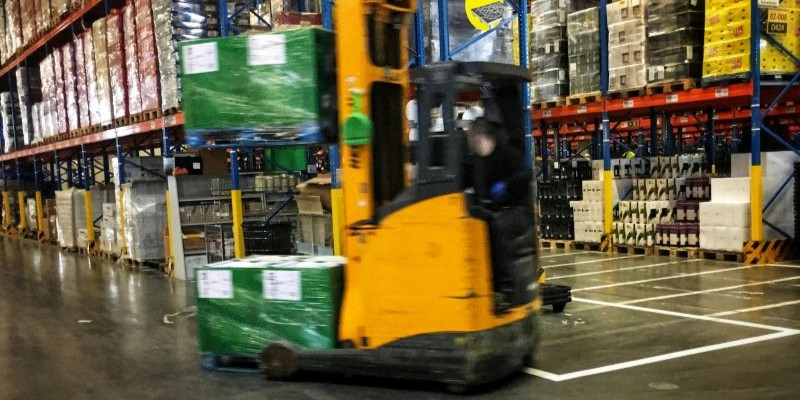
Manufacturing warehouses face unique challenges.
Production schedules depend on accurate material availability, efficient warehouse workflows, and uninterrupted movement between storage and the production floor.
RFID helps manufacturers maintain visibility into:
- raw materials
- work-in-progress inventory
- finished goods
- staging areas
- tools and equipment
- returnable containers
This visibility improves production coordination while reducing shortages and delays.
RFID also strengthens traceability and compliance.
Manufacturers can track serialized inventory, automate lot tracking, and maintain digital documentation for audits and regulatory requirements.
FactorySense provides RFID solutions designed specifically for manufacturing environments, helping companies modernize warehouse operations while improving throughput.
Common Challenges and Limitations of RFID in Warehousing
RFID delivers significant benefits, but implementation requires planning.
One common challenge is signal interference.
Metal shelving, liquids, and dense warehouse environments can affect read performance if systems are not designed correctly.
Another challenge is upfront investment.
RFID hardware, software, tags, and system integration require initial capital. However, many organizations recover those costs through labor savings and operational improvements.
Tag durability can also be a concern.
Some environments require specialized tags for harsh temperatures, chemicals, or repetitive handling.
The best way to overcome these challenges is through proper system design, pilot testing, and ongoing optimization.
A strong RFID strategy ensures long-term success.
Security and Privacy Concerns in RFID Warehouse Tracking
As RFID adoption grows, security becomes increasingly important.
Because RFID systems transmit data wirelessly, organizations must protect inventory information from unauthorized access.
Potential risks include:
- unauthorized tag reads
- data interception
- system breaches
- manipulated inventory records
These concerns can be addressed through modern security practices.
Best practices include:
- encrypting tag data
- using secure communication protocols
- limiting system access permissions
- performing regular security audits
When implemented correctly, RFID systems can be highly secure and support compliance requirements across regulated industries.
Case Studies: RFID Success Stories in Warehouse Operations
Many companies have already transformed warehouse performance with RFID.
A large retailer implemented RFID across its distribution centers and reduced inventory costs by 25% through better stock visibility and fewer stockouts.
A manufacturer of high-value electronics used RFID to track materials and finished goods, reducing theft and product loss by 30%.
A third-party logistics provider integrated RFID into receiving and shipping workflows, increasing operational throughput while reducing shipping errors.
These results demonstrate a consistent pattern:
RFID improves visibility, lowers costs, and creates measurable operational gains.
Companies that invest in warehouse visibility often gain a significant competitive advantage.
The Future of RFID in Warehouse Automation
Warehouse automation is accelerating.
Manufacturers are investing in smarter, faster, and more connected operations.
RFID provides the real-time visibility infrastructure that makes advanced automation possible.
Future warehouse systems will increasingly rely on:
- autonomous mobile robots
- AI-driven forecasting
- smart picking systems
- automated replenishment
- predictive analytics
- real-time dashboards
All of these technologies depend on accurate data.
RFID supplies that data continuously.
As supply chains become more connected, RFID will continue to play a critical role in warehouse modernization.
Manufacturers investing in RFID today position themselves for stronger agility, better operational resilience, and long-term competitive advantage.
Frequently Asked Questions
How does RFID improve warehouse tracking?
RFID improves warehouse tracking by automatically monitoring inventory movement in real time without requiring manual barcode scans. This creates faster, more accurate warehouse visibility.
Can RFID reduce warehouse labor costs?
Yes. RFID reduces manual inventory tasks, speeds up receiving and shipping workflows, and helps warehouse teams operate more efficiently.
Does RFID integrate with warehouse management systems?
Yes. RFID systems can integrate with warehouse management systems, ERP platforms, and manufacturing software to automate inventory visibility, reporting, and operational workflows.