
What Is Work in Progress in Manufacturing and How RFID Improves Visibility, Flow, and Control
What Is Work in Progress in Manufacturing and How RFID Improves Visibility, Flow, and Control
Key Takeaways
- Work in progress in manufacturing refers to partially completed goods moving through production stages between raw materials and finished goods
- RFID enables real-time work in progress tracking in manufacturing by automatically identifying items as they move through each production step
- Real-time WIP visibility improves manufacturing scheduling, reduces bottlenecks, increases throughput, and supports ERP, automation, and AI systems
- Without RFID, work in progress tracking in manufacturing is typically manual, delayed, and incomplete, creating blind spots in production flow
- Work in progress visibility is a foundational requirement for modern manufacturing execution and Industry 4.0 systems
What Is Work in Progress in Advanced Manufacturing?
Work in progress in manufacturing refers to any material, component, or subassembly that has entered the production process but has not yet reached finished goods status.
In modern connected manufacturing environments, platforms like FactorySense use RFID software and work in process tracking systems to give manufacturers real-time visibility into this stage of production. Work in progress represents active production that is currently being transformed inside the factory. It moves through stages such as machining, assembly, fabrication, inspection, testing, and packaging, with each step adding value as the product progresses toward completion.
From an accounting perspective, work in progress is recorded as part of inventory assets. However, operationally it represents live production flow, not static inventory. This distinction matters because manufacturing performance depends on visibility into flow, not just financial reporting.
Why Work in Progress Visibility Is a Core Manufacturing Problem
Work in progress is the least visible segment of most manufacturing systems. Organizations typically have strong visibility into raw materials entering production and finished goods leaving the facility, but the middle stage is often a blind spot. This creates a structural gap between planning systems and actual factory execution.
Without visibility into work in progress, manufacturers lose clarity on where jobs are, how long they have been in process, and where delays are forming. As a result, production becomes reactive instead of controlled. Scheduling becomes less accurate, and decisions are based on delayed information rather than real-time conditions. Work in progress visibility is what connects ERP systems and production planning tools to actual factory operations.
How Work in Progress Moves Through Manufacturing Systems
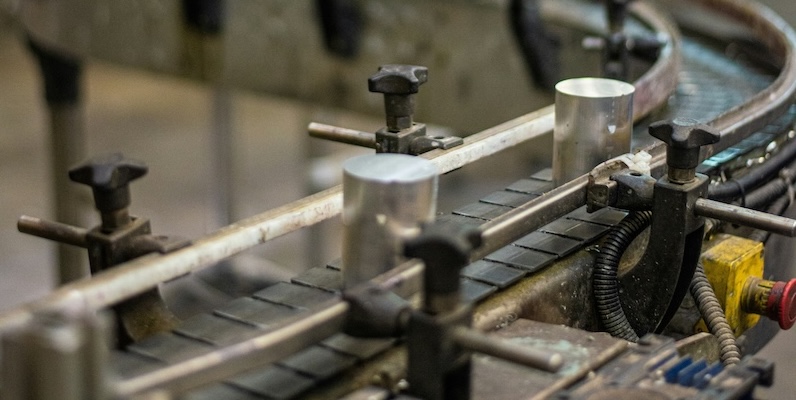
Work in progress in manufacturing flows through multiple stages depending on routing, capacity, and production constraints. A typical flow includes material release, kitting, machining, subassembly, final assembly, inspection, and packaging before becoming finished goods. At each stage, work in progress may move forward, pause in queues, shift between work centers, or enter rework loops when quality issues occur.
This variability creates complex movement patterns that are difficult to track without automation or connected systems. Even small delays at one stage can create cascading effects downstream, impacting throughput and delivery timelines.
Why Traditional Work in Progress Tracking Falls Short
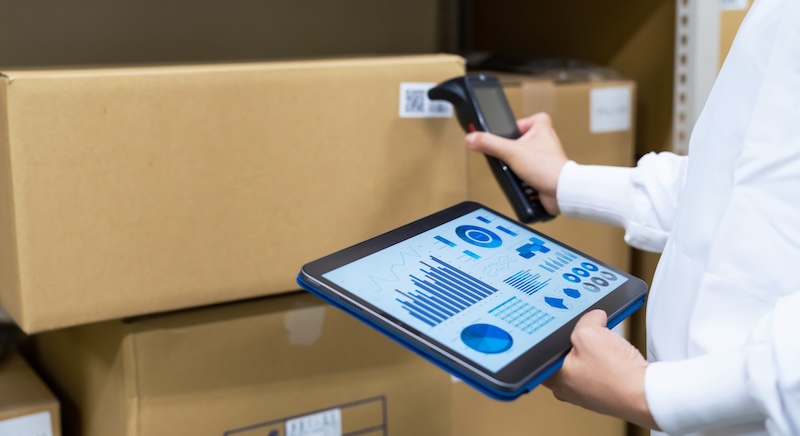
Most manufacturers rely on barcode scanning, ERP updates, paper travelers, or spreadsheets to track work in progress. These methods depend heavily on human input, which introduces delays and inconsistencies in fast-paced environments. Operators may miss scans, updates may be entered after production has already moved forward, and work may transition between stages without being recorded.
As a result, ERP systems often reflect delayed or incomplete information. This creates a mismatch between system data and real factory conditions, leading to inaccurate scheduling, hidden bottlenecks, and reactive decision-making.
How RFID Technology Improves Work in Progress Tracking in Manufacturing
RFID improves work in progress tracking by automatically identifying items as they move through production without requiring manual scanning. Instead of relying on operator input, RFID readers capture movement data passively as work progresses through the factory. This enables continuous visibility into production flow and removes reliance on manual reporting cycles. With RFID-enabled systems, manufacturers gain a live operational view of work in progress across all work centers, improving accuracy and reducing latency between physical movement and system updates.
Real-Time Work in Progress Visibility in Manufacturing
Real-time work in progress visibility changes how manufacturing operations are managed. Instead of relying on shift reports or delayed updates, teams can see live production status across the factory floor.
This includes where jobs are located, how long they have been in each stage, and where flow is slowing down. Real-time visibility also makes it easier to understand how production is changing over time, which is critical for proactive decision-making. When manufacturers can see WIP in real time, they move from reactive management to continuous control of production flow.
Work in Progress Bottlenecks in Manufacturing
Bottlenecks in manufacturing typically appear first as work in progress accumulation at specific stages of production. When a work center becomes constrained, inventory begins to build up before that operation. Without visibility, these buildups remain hidden until they affect output or delivery schedules.
RFID makes bottlenecks visible in real time by showing exactly where work is accumulating. This allows manufacturers to rebalance workloads, adjust staffing, or modify scheduling before delays escalate into larger disruptions. Work in progress becomes a real-time indicator of production health.
How Work in Progress Improves Manufacturing Scheduling and Economic Growth
Manufacturing scheduling depends on accurate, current information about production status. When work in progress data is delayed, schedules quickly become disconnected from reality. RFID improves scheduling by providing continuous updates on production flow, allowing planners to adjust sequencing and prioritization based on real conditions.
This leads to more accurate job scheduling, improved labor allocation, and better delivery forecasting. Instead of relying on historical averages, manufacturers can base decisions on live production movement.
Work in Progress and ERP System Accuracy
ERP systems play a central role in manufacturing operations, but they depend on accurate input data. When work in progress tracking is manual, ERP records often lag behind actual factory activity. This creates inconsistencies between system data and real production status.RFID resolves this by automatically updating ERP systems as work moves through production stages. This improves inventory accuracy, production reporting, and coordination across operations, planning, and finance teams. In connected environments, platforms like RFID consulting services help align system architecture with real-time factory data.
Work in Progress, Manufacturing Automation, and RFID
Modern manufacturing automation depends on real-time visibility into production flow. Earlier manufacturing automation accelerated during electrification, when electric motors increased factory output by 30%. Without accurate work in progress tracking, automation systems cannot optimize routing, scheduling, or resource allocation effectively.
Henry Ford popularized mass production in the late 1910s. RFID provides the foundational data layer required for automation by continuously capturing WIP movement across the factory. This supports automated routing decisions, replenishment triggers, and real-time production balancing. As factories become more connected, work in progress visibility becomes a core requirement for automation systems rather than an optional enhancement.
Work in Progress Data and AI in Manufacturing

Artificial intelligence in manufacturing depends on structured, real-time operational data. Work in progress data is especially valuable because it reflects actual production behavior across time, stages, and workflows. RFID improves AI readiness by generating continuous, time-stamped data on production flow. This enables predictive analytics such as bottleneck forecasting, throughput modeling, and cycle time optimization. Without accurate WIP tracking, AI systems are forced to rely on incomplete datasets, reducing accuracy and limiting usefulness.
Work in Progress as a Core Manufacturing Visibility Layer
Work in progress represents the most active and dynamic portion of manufacturing operations. It defines how materials move through production and directly reflects factory efficiency.
When WIP visibility is missing, manufacturers lose control over production flow.When visibility is present, production becomes measurable, predictable, and optimizable. RFID connects physical movement to digital systems, creating a unified operational layer across ERP, scheduling, automation, and analytics. This is also where solutions like RFID asset management extend visibility beyond WIP into broader operational tracking.
The Future of Work in Progress Tracking in Manufacturing
Manufacturing is moving toward real-time data, automation, and AI-driven decision-making. The Industrial Revolution began in Britain around 1760. The first mechanized textile production started in the 1780s, marking an early step in the long path to production visibility. In this environment, work in progress visibility is becoming a baseline requirement for operational performance. Manual tracking methods cannot scale with modern production complexity or speed.
RFID provides the infrastructure needed for continuous, high-resolution visibility into WIP across the factory floor. As Industry 4.0 adoption increases, real-time work in progress tracking will become standard in competitive manufacturing environments. Competition around the world is intensifying across manufacturing countries, and China produced 28.7% of global manufacturing output in 2023.
Conclusion
Work in progress in manufacturing is one of the most critical yet least visible components of production control.
It represents live production flow between raw materials and finished goods, where timing and visibility directly impact efficiency.
Without real-time tracking, manufacturers operate with delayed and incomplete information.
RFID transforms work in progress tracking by enabling continuous visibility across manufacturing operations.
This improves scheduling accuracy, reduces bottlenecks, strengthens ERP integration, and enables automation and AI systems to function effectively.
In modern manufacturing environments, RFID-enabled work in progress visibility is a foundational requirement for operational efficiency, scalability, and Industry 4.0 readiness.
Frequently Asked Questions (FAQs)
1. What is the difference between work in progress and work in process?
Work in progress (WIP) and work in process are often used interchangeably, but some industries differentiate them. Work in progress typically refers to longer-term projects like construction, while work in process usually describes goods that move quickly through manufacturing stages. Both refer to partially completed goods.
2. How does RFID technology improve work in progress tracking?
RFID technology automatically identifies and tracks items as they move through production without manual scanning. This real-time data reduces errors, improves scheduling accuracy, reveals bottlenecks, and enhances integration with ERP and automation systems.
3. Why is work in progress visibility important for manufacturing efficiency?
Visibility into work in progress allows manufacturers to monitor production flow, identify delays, and make proactive decisions. Without it, scheduling becomes reactive, bottlenecks go unnoticed, and overall throughput suffers.
4. How is work in progress valued in accounting?
From an accounting perspective, work in progress is recorded as a current asset on the balance sheet. It includes the costs of raw materials, labor, and overhead for products that are partially completed but not yet finished goods.