
Celebrating the People Who Keep American Manufacturing Moving
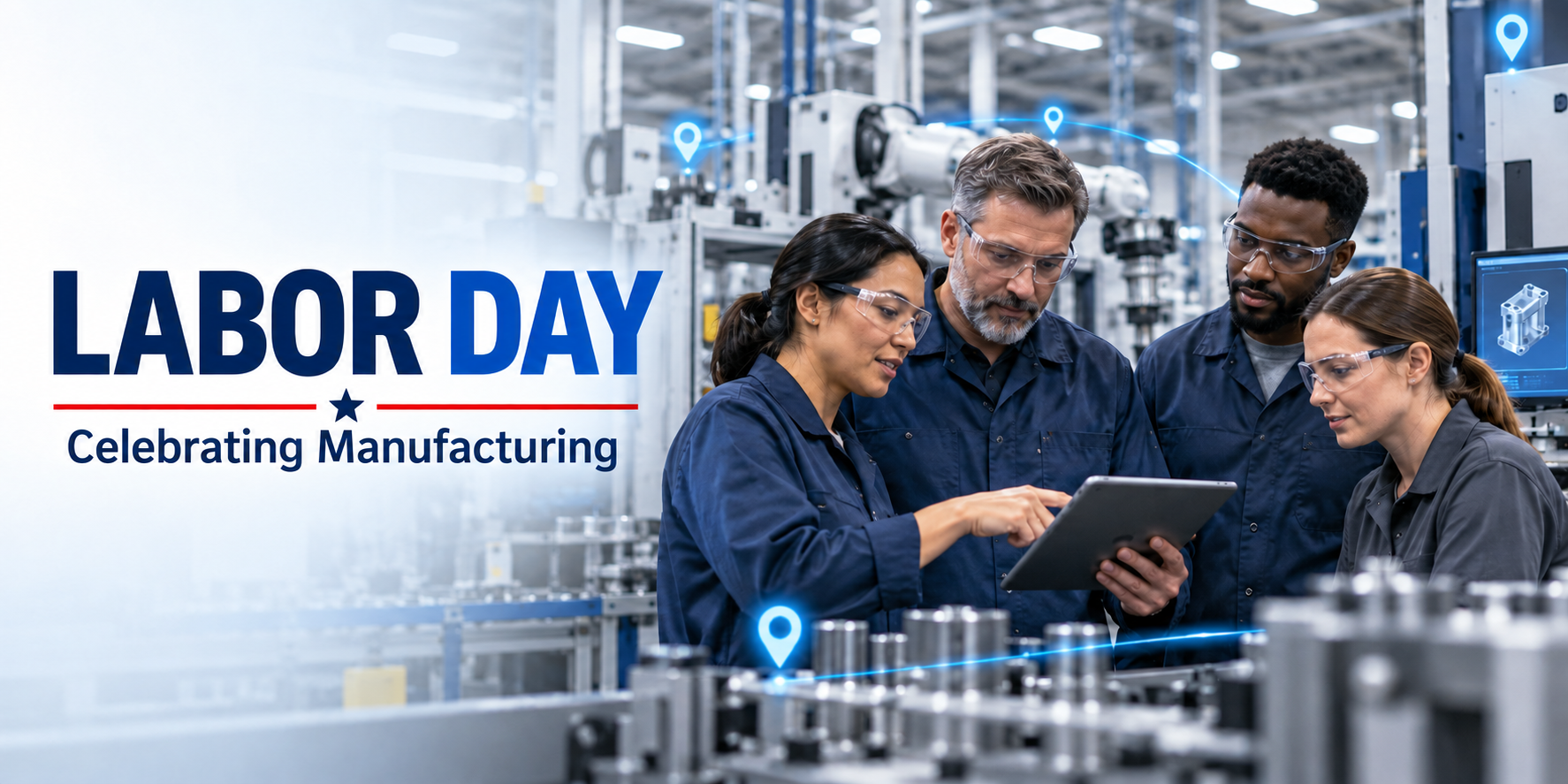
Celebrating the People Who Keep American Manufacturing Moving
Honoring the Skill, Dedication, and Innovation Behind Every Operation
Labor Day is an opportunity to recognize the people whose knowledge, skill, and commitment keep American industry moving forward. Across manufacturing facilities, warehouses, tool cribs, production lines, and maintenance departments, workers solve problems every day that directly affect quality, safety, productivity, and customer satisfaction.
At FactorySense, we see technology as a way to support those people. The best manufacturing systems do more than collect data. They reduce repetitive work, make important information easier to access, and give employees the visibility they need to make confident decisions.
The holiday also gives manufacturers a reason to consider how working conditions have changed and how they can continue improving. New technology, shifting customer expectations, complex supply chains, and growing demands for traceability have transformed the modern plant floor. Through every change, manufacturing employees have continued to adapt, learn new skills, and find better ways to produce the goods that businesses and communities rely on.
Manufacturing Still Depends on People
Modern manufacturing may rely on increasingly connected equipment and automated processes, but people remain at the center of every successful operation. Experienced employees understand how materials move through a facility, where delays tend to occur, which tools are critical to production, and how small process improvements can prevent larger problems.
Their expertise cannot be replaced by a dashboard or a tracking system. Technology is most valuable when it helps employees apply that expertise more effectively.
That means giving teams reliable answers to practical questions: Where is the tool needed for the next job? Has this material exceeded its allowable out-time? Is a calibrated asset ready for use? Did the correct component reach the correct production area? When those answers are available in real time, employees can spend less time searching, recording information, and correcting preventable errors.
The people closest to production are also often the first to recognize an inefficient process. They notice when tools are repeatedly returned to the wrong location, when material records do not match physical inventory, or when a manual handoff consistently causes delays.
Listening to those employees is essential when manufacturers evaluate new technology. Their practical knowledge helps determine what should be automated, what information should be displayed, and how a system can fit naturally into the working day.
The Hidden Cost of Searching for Information
Not every manufacturing delay begins with a machine failure or material shortage. Many begin with a much simpler problem: someone cannot find what they need.
A technician may need a specific calibrated tool before maintenance can begin. An operator may be waiting for a material that appears in the system but is not in its expected location. A supervisor may need to confirm whether a component has completed inspection.
Each individual search might seem minor, but repeated interruptions can consume time, delay downstream work, and create frustration across multiple departments.
Employees often compensate for limited visibility through personal experience. They learn which storage areas to check, who to call, and which spreadsheet is most likely to contain the latest information. That resourcefulness keeps production moving, but it also places an unnecessary burden on the workforce.
Important operational knowledge may remain scattered among individuals instead of being available to the entire team.
Real-time tracking can make that information easier to access. Rather than depending on memory or a series of phone calls, authorized employees can use connected manufacturing visibility products to see the latest known location and status of an asset, tool, material, or work order.
This does not diminish the value of experience. It gives experienced workers better information and helps newer employees become productive more quickly.
Reducing the Burden of Manual Work
Many manufacturing teams still depend on handwritten logs, spreadsheets, barcode scans, and manual data entry to track assets and production activity. These processes often require skilled employees to spend valuable time on administrative tasks instead of the work that most benefits from their experience.
FactorySense helps manufacturers automate data collection using RFID hardware and connected technologies. Assets, tools, materials, and work in progress can be identified and tracked as they move through a facility, creating timely records without requiring employees to document every movement manually.
This increased visibility can help teams:
- Locate tools, materials, and equipment faster
- Reduce unnecessary searching and production delays
- Improve inventory and work-in-progress accuracy
- Maintain clearer calibration, inspection, and material records
- Identify bottlenecks before they disrupt production
- Share reliable information across operations, quality, and management teams
By removing unnecessary friction from daily processes, manufacturers can create an environment where employees are better equipped to focus on safety, quality, problem-solving, and continuous improvement.
Automation can also improve the consistency of operational records. A manual process depends on every required scan, entry, and handoff occurring correctly, even during busy shifts or unexpected production changes.
Automated data capture can record activity as it happens, reducing the number of routine tasks employees must remember while helping business systems reflect actual conditions on the plant floor.
Helping Employees Work More Safely and Confidently
Better visibility can support a safer and more organized work environment. When employees can quickly locate the correct equipment and confirm its status, they are less likely to rely on an unsuitable substitute or use an asset with incomplete records.
Clear information about inspections, calibration, maintenance, and material conditions can help teams follow established processes with greater confidence.
Visibility is especially valuable when time-sensitive materials are involved. In composite manufacturing, for example, employees may need to monitor how long temperature-sensitive materials have remained outside controlled storage.
FactorySense solutions for tracking composite materials can help automate out-time records, reducing the burden of maintaining handwritten logs while giving production and quality teams a clearer view of remaining material life.
RFID can also reduce the need for employees to conduct repeated manual inventory counts or search large areas for missing items. Depending on the application, readers can identify tagged items without requiring a direct line of sight.
The goal is not simply to make a process faster. It is to reduce avoidable movement, interruptions, uncertainty, and administrative work throughout the facility.
Building Technology Around the Workforce
A successful digital transformation should fit the realities of the facility and the people who work there. It should account for existing workflows, operating conditions, business systems, and production goals. Most importantly, it should make the work easier to understand and manage.
FactorySense provides purpose-built RFID tracking products designed around each manufacturer’s specific operation. Because every facility is different, our team works with stakeholders to understand how employees currently perform their jobs and where better information could make the greatest difference.
That collaborative approach helps ensure the finished solution supports the workforce instead of creating another disconnected system employees must maintain.
Preserving Knowledge as the Workforce Changes
Manufacturing knowledge is built over years. Longtime employees understand the history behind processes, recognize unusual conditions, and know how decisions in one department affect work elsewhere in the facility.
As experienced workers retire or move into new roles, manufacturers face the challenge of transferring that knowledge to the next generation.
Connected systems can help preserve part of that operational understanding. When asset movements, material histories, process milestones, and exceptions are recorded consistently, employees have a clearer record of how work actually flows through the facility.
New team members can spend less time learning where information is stored and more time developing the technical skills required for their roles.
Technology cannot capture every lesson an experienced employee has learned. However, it can create a shared source of operational information that supports training, accountability, and collaboration across shifts and departments.
When employees work from the same current data, it becomes easier to communicate priorities, investigate problems, and maintain consistent processes.
Giving Teams a Voice in Digital Transformation
The strongest technology projects involve the workforce from the beginning. Operators, supervisors, maintenance personnel, quality teams, and material handlers each see a different part of the operation.
Their input can reveal practical requirements that may not be obvious from a conference room or a process diagram.
Before implementing a tracking solution, manufacturers should understand where employees lose time, which manual tasks create the most frustration, and which decisions are being made with incomplete information.
They should also consider how the system will fit into existing responsibilities. A successful solution needs clear workflows, useful alerts, accessible information, and appropriate training.
FactorySense approaches each implementation with the complete operation in mind. Our RFID consulting services help manufacturers evaluate processes, identify valuable use cases, select appropriate hardware, and plan integrations with existing platforms.
This creates an opportunity to build a system around real operational needs instead of forcing employees to adapt to a generic technology package.
Connecting the Plant Floor With the Rest of the Business
The work performed on the plant floor affects purchasing, scheduling, quality, inventory, customer service, and financial planning. When production information is delayed or inaccurate, employees throughout the organization may be forced to make decisions using incomplete data.
Integrating real-time tracking information with existing ERP, MES, maintenance, or warehouse systems can reduce the gap between physical activity and digital records.
A material movement, tool checkout, or production milestone can become visible to the people and systems that depend on it. This helps departments coordinate their work without repeatedly requesting updates from plant-floor employees.
Better integration can also reduce duplicate data entry. Instead of recording the same event in multiple places, manufacturers can design a connected flow of information that supports both the employees performing the work and the teams responsible for planning and reporting.
The result is a more accurate operational picture with fewer administrative demands on the workforce.
Recognizing Work by Improving How Work Gets Done
Celebrating manufacturing employees should include more than words of appreciation. It should also include a commitment to understanding the obstacles they encounter and giving them tools that help remove those obstacles.
Sometimes that means replacing a paper log that is difficult to maintain. In other cases, it means making inventory visible across a large facility, automating alerts for time-sensitive materials, or connecting production activity to an existing business system.
The right improvement depends on the people, processes, and priorities within each operation.
When technology is designed thoughtfully, it can make work more predictable and information more dependable. Employees spend less time tracking down answers and more time applying the skills for which they were hired.
Managers gain stronger visibility without creating additional reporting work for their teams. Customers benefit from more consistent, traceable production.
Supporting the Future of American Manufacturing
The future of manufacturing will require both advanced technology and experienced people. As operations become more connected, manufacturers will need employees who can interpret information, improve processes, maintain quality, and respond quickly when conditions change.
Real-time visibility gives those employees a stronger foundation. When accurate operational data is available at the right moment, teams can coordinate more effectively and make informed decisions with greater confidence.
Technology handles more of the repetitive tracking, while people remain focused on the judgment, creativity, and technical skill that move the operation forward.
This Labor Day, FactorySense recognizes the operators, technicians, engineers, supervisors, quality professionals, maintenance teams, logistics personnel, and countless others who keep manufacturing running.
Their work builds the products, infrastructure, and capabilities that businesses and communities depend on every day.
To everyone working across the manufacturing industry, thank you for the skill and dedication you bring to the job.
Learn more about how FactorySense supports manufacturers across a range of industries, or contact our team to discuss opportunities to improve visibility in your facility.