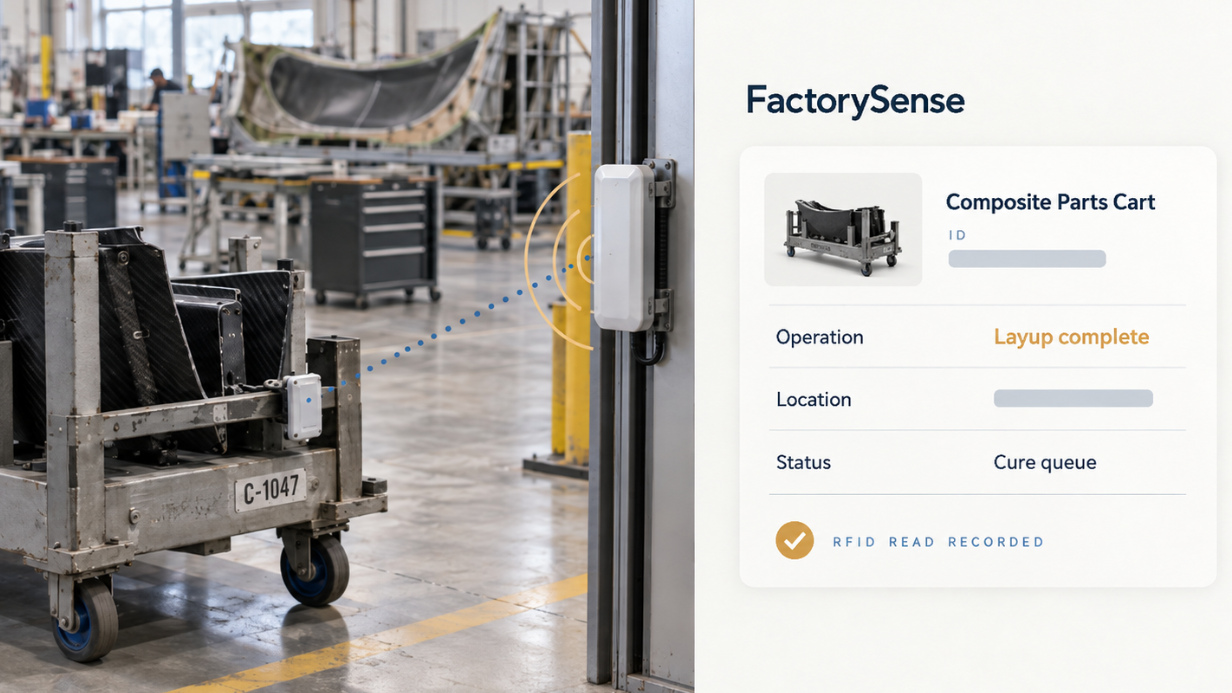
Transforming Manufacturing with RFID Technology

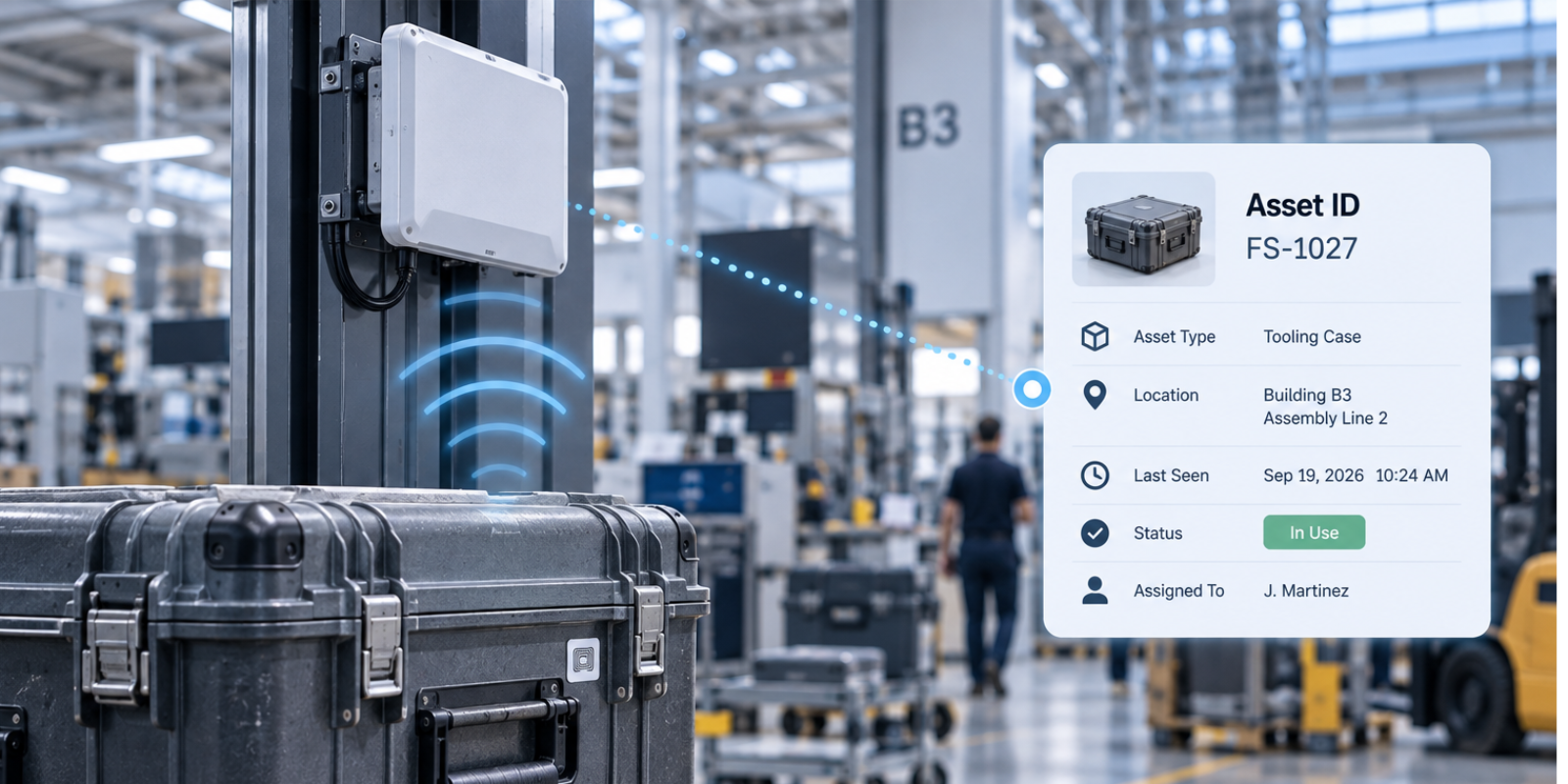
- Most digital transformation programs assume accurate real-time data about physical objects, then discover it does not exist. That gap is the problem RFID addresses.
- The applications divide cleanly: asset accountability, work in process, inventory and supply chain traceability. Each has a different read point design and tagging level.
- Starting in the area your team already distrusts gives the clearest before-and-after, because the baseline is worst where confidence is lowest.
Industry 4.0 assumes something that is rarely true: that accurate, current data exists about physical objects on the floor. Most plants have excellent data about transactions and very poor data about things. The order is in the ERP; the material is somewhere in building three.
That gap is what RFID addresses, and it is why it tends to sit underneath digital transformation programs rather than alongside them. This article covers where it fits, the four application areas that differ more than they appear to, and how to decide where to start.
The gap between the system and the floor
A manufacturing system of record is updated by people reporting what happened. That reporting is accurate at the moment it is made and decays immediately, and the rate of decay rises with the number of movements and the size of the site.
Every downstream problem follows from that. Planning works from a picture that is hours or days old. Supervisors discover bottlenecks after they have formed. Material is reordered because it cannot be found. None of this is a failure of the ERP, which is faithfully recording what it was told.
RFID closes the gap by recording movement rather than asking someone to report it. What follows is not a new system so much as an older one finally being accurate. We cover the mechanics in how manufacturers connect real-time factory data to business systems.
Four application areas, and why they are not the same project
Teams often speak about RFID as a single deployment. In practice it divides into four, each with its own read point design, tagging level and economics.
Asset and tool accountability. A relatively small population of long-lived items that move between known locations. The question is where something is now. This is usually the easiest place to start and the easiest to measure, because loss and search time are already felt. See the asset tracking guide.
Work in process. High volume, short-lived, and identity changes as items are transformed. A read frequently means an operation completed rather than that something arrived, which makes reader placement a process decision. Harder than asset tracking, and covered in the WIP article.
Inventory. Raw material, components and finished goods. The gain is that counting stops being a scheduled event. See RFID inventory management.
Quality and traceability. Less about location and more about history: which batch, which supplier, which operation. This is where regulated manufacturers usually find the strongest case, because the evidence burden is already expensive. See RFID for supply chain quality.
The reason to separate them is scoping. A pilot designed for asset accountability will not answer a WIP question, and discovering that after installation is expensive.
What determines whether it works
Three things, none of which is the choice of vendor.
The environment. Metal and liquid mask tag returns. In metal-dense plants, composites facilities and outdoor yards, physics rather than software sets the limits, and tag type and read point design follow from a survey rather than a specification sheet.
The integration. A read that does not become a transaction in the system of record creates a second version of the truth. Over time that is worse than one imperfect version.
Adoption. If the data is accurate, people use it and stop walking the floor. If it is not, they revert within a two-week period and the system becomes shelfware. Accuracy is therefore an adoption problem as much as a technical one.
Where to start
Ask your own team which areas of the plant they do not trust the numbers for. The answers come quickly, they are consistent across sites, and they point at the place where the baseline is worst and the change will be most visible.
Scope the first deployment to that area and one question worth answering, with the measurement agreed before anything is tagged. What you learn about tags, read points and adoption there will change the design of everything after it, which is an argument for starting small rather than for starting cautiously.
The next step
Which of the four areas to start with, and what it is worth, is decided by how your plant actually runs. Book a Facility Visibility Assessment and we will walk it with your team.
Where should a manufacturer start with RFID?
With the area your own team already distrusts. Ask which parts of the plant they do not believe the numbers for and they will name them immediately. That is where the baseline is worst and the change is most visible.
Is RFID an Industry 4.0 technology?
It is the layer underneath it. Most Industry 4.0 initiatives assume accurate real-time data about physical objects and then discover that no such data exists. RFID is one of the few ways to generate it without adding manual steps.
Do we have to do everything at once?
No, and it is usually a mistake to try. Each application area has its own read point design and tagging level, so a first deployment in one area teaches you things that change the design of the next.
Schedule a complementary working session with an RFID professional to discuss your floor or yard, your systems of record, and where the visibility gap between them is costing you.
Book a session