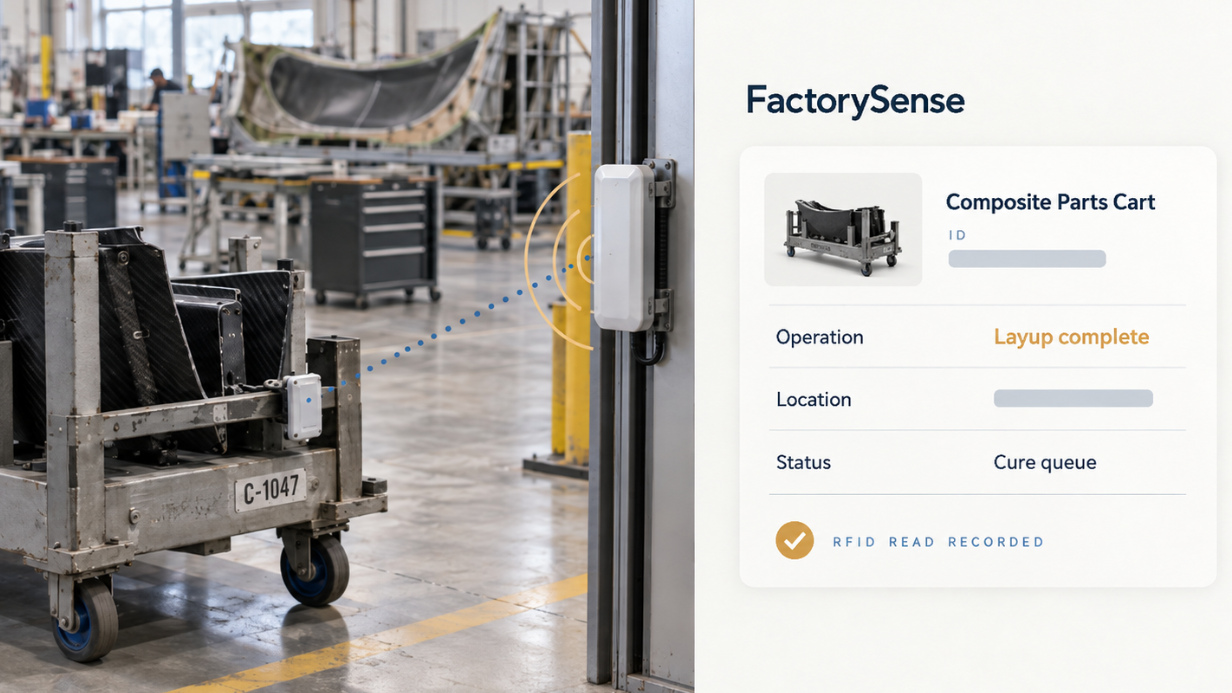
RFID WIP Tracking in Medical Device Manufacturing

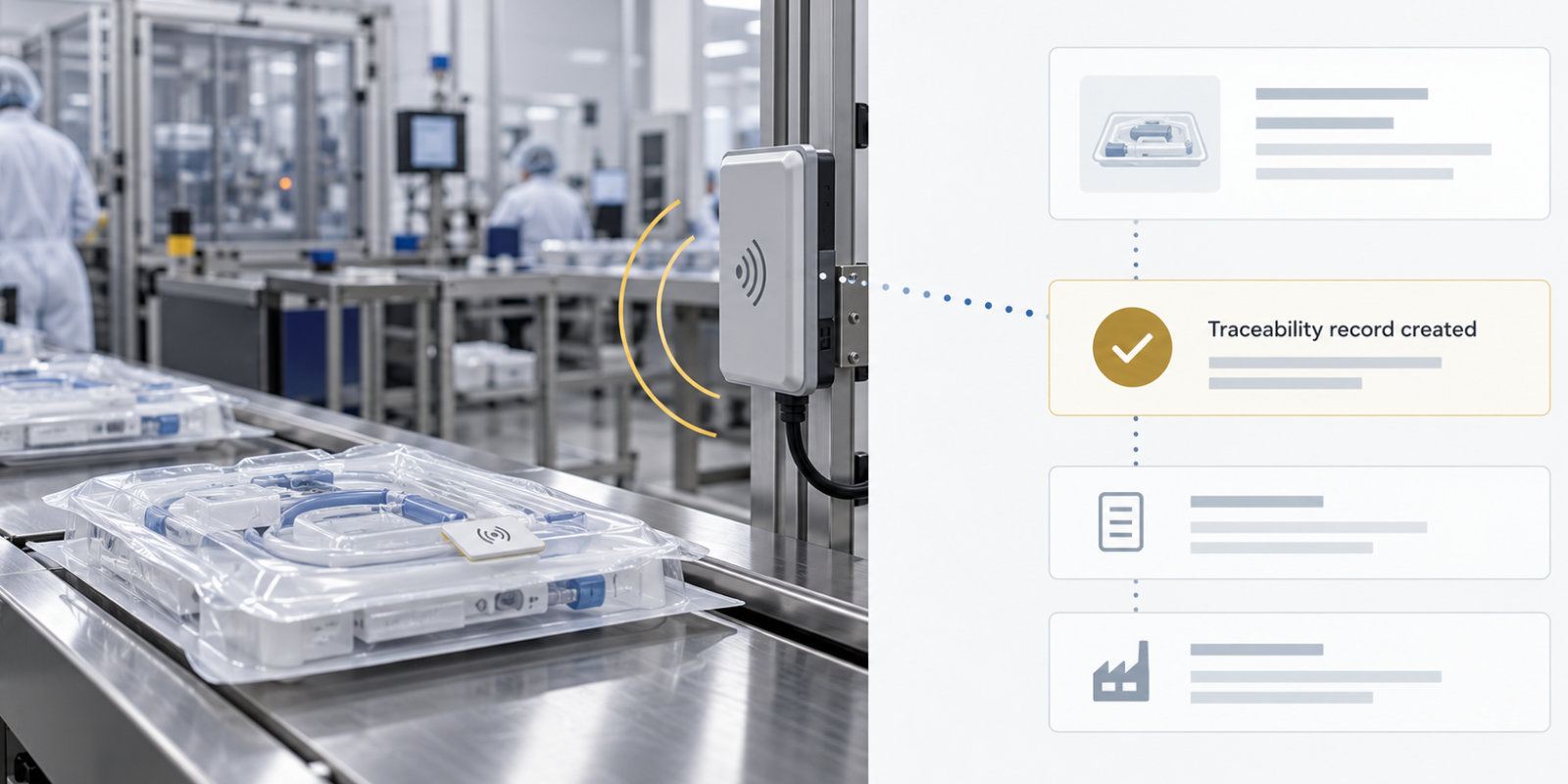
- The manufacturer replaced manual barcode and paper WIP updates with RFID observations at selected production checkpoints.
- Fixed readers, handheld readers and ERP integration gave operations and quality teams a common history of material movement through production.
- Zone-based alerts added evidence around movement between controlled areas without replacing the underlying quality system.
Manual WIP records were falling behind the physical process
A multinational medical device manufacturer producing precision surgical and implantable products relied on barcodes and handwritten logs to track work in process. Those methods required an operator to create the record at the same time the material moved. When a scan was missed or paperwork was completed later, the production record and the physical item could diverge.
In a regulated environment, that gap creates more than a scheduling inconvenience. Production and quality teams need to reconstruct where material has been, which process step it reached and whether movement between controlled areas occurred as expected.
The system was designed around production checkpoints
FactorySense implemented an RFID WIP system that combined fixed readers at selected process transitions with handheld readers for verification and exception handling. Components and subassemblies were associated with RFID identities early in the process so later observations could be tied back to the appropriate production record.
The fixed read points were not intended to create continuous coordinates for every item. Their job was to observe meaningful transitions. When material passed a checkpoint, the software resolved the RFID observation and made the event available to the company's existing ERP workflow. Handheld readers gave quality and operations teams a way to confirm an item or investigate a discrepancy without depending on a line-of-sight barcode scan.
Controlled-area movement became easier to audit
The deployment also used zone logic around sterile and non-sterile areas. When tagged material moved across a defined boundary, the system could create an alert or record the event for later review. That did not replace the manufacturer's quality procedures, but it added an independent record of movement that did not depend on someone remembering to enter it afterward.
Production-floor dashboards presented WIP status and movement history using the same underlying events. This gave operations and quality teams a common view rather than separate spreadsheets or delayed manual reports.
The value was a more complete production history
The biggest change was not a new dashboard. It was the reduction in gaps between physical movement and the digital production record. Material could move through selected stages without requiring a barcode scan at every transition, while exceptions could still be investigated with handheld readers.
For a medical device manufacturer, that makes the data more useful during production and easier to reconstruct during an audit. The ERP remains the system of record; RFID supplies evidence about physical movement that would otherwise depend on manual execution.
What this deployment shows
RFID is most useful in regulated manufacturing when it strengthens an existing traceability process rather than pretending to replace it. A reader observation is not proof that a quality step was completed, and a location event is not a substitute for an electronic device history record. It is another piece of evidence that can make the overall record more timely and complete.
That distinction is why the deployment focused on controlled transitions, identity resolution and integration. Our guide to RFID for work-in-process explains the same design principle in more detail.
What did RFID replace in this medical device manufacturing process?
The prior WIP process relied on barcode scans and handwritten logs. RFID added automatic observations at selected production transitions while handheld readers remained available for verification and exception handling.
Did RFID replace the manufacturer's quality or compliance system?
No. The ERP and existing quality procedures remained authoritative. RFID supplied additional evidence about physical movement so the production history could be more complete and timely.
How were controlled areas handled?
The system used zone logic around sterile and non-sterile areas so movement across a defined boundary could create an alert or a record for later review.
Schedule a complementary working session with an RFID professional to discuss your floor or yard, your systems of record, and where the visibility gap between them is costing you.
Book a session