RFID Frequencies Explained: LF, HF, NFC and UHF


- LF systems commonly operate around 125 or 134 kHz, HF and NFC use 13.56 MHz, and passive UHF RAIN RFID operates in regional bands within the roughly 860 to 930 MHz range.
- LF and HF typically use near-field magnetic coupling, while passive UHF uses far-field energy harvesting and backscatter for longer-range inventory and transition capture.
- Choose frequency from the application, object and interaction model rather than from maximum advertised read distance alone.
RFID does not operate at one universal frequency. Different RFID families use different parts of the spectrum, and frequency changes the coupling mechanism, antenna design, read behavior and sensitivity to surrounding materials. The useful industrial comparison is usually LF, 13.56 MHz HF or NFC, and passive UHF RAIN RFID.
Low frequency RFID
LF RFID commonly operates around 125 kHz or 134.2 kHz depending on the application and standard. Read distances are generally short, and the systems use near-field magnetic coupling rather than the far-field backscatter model used by passive UHF. Animal identification is one well-established LF application, with ISO 11784 and related standards defining identification structures and system behavior.
High frequency RFID at 13.56 MHz
HF RFID for item identification operates at 13.56 MHz, and ISO/IEC 18000-3 defines air-interface parameters for systems at that frequency. HF still generally uses near-field coupling and is common in smart cards, library applications and other close-range interactions. The shorter interaction distance can be useful when deliberate selection of one nearby item is part of the process.
NFC is part of the 13.56 MHz family
NFC also uses a 13.56 MHz base frequency, but it adds a specific ecosystem of protocols and device behaviors designed for close interaction. NFC Forum describes certified compliant connections at very short distances and supports battery-free tag modes, which is why phones can interact with many NFC tags. Our NFC versus RFID guide explains why that intentional tap-like behavior is different from an automated UHF portal.
Passive UHF RAIN RFID
RAIN RFID uses regional UHF allocations within the band covered by EPC Gen2 and ISO/IEC 18000-63. GS1's current Gen2 standard defines the passive UHF air interface used across modern supply-chain and industrial deployments, while regional regulations determine the exact channels and power rules available in each country. In the United States, passive UHF systems commonly operate in the 902 to 928 MHz ISM band.
Passive UHF can support multi-meter reads and rapid inventory of many tags because the tag harvests energy from the reader's electromagnetic wave and responds by backscatter. Those same far-field properties make tag orientation, metal, liquids and antenna geometry important design variables. The passive RFID physics guide explains the forward and return links in more detail.
Frequency does not determine range by itself
It is tempting to summarize LF as short range, HF as medium range and UHF as long range, but that hides important variables. Reader power, tag sensitivity, antenna gain, tag size, object material, orientation and regulatory limits all contribute to practical distance. A small UHF tag on metal can perform worse than a larger properly tuned tag even though both use the same nominal frequency family.
Which frequency fits industrial tracking?
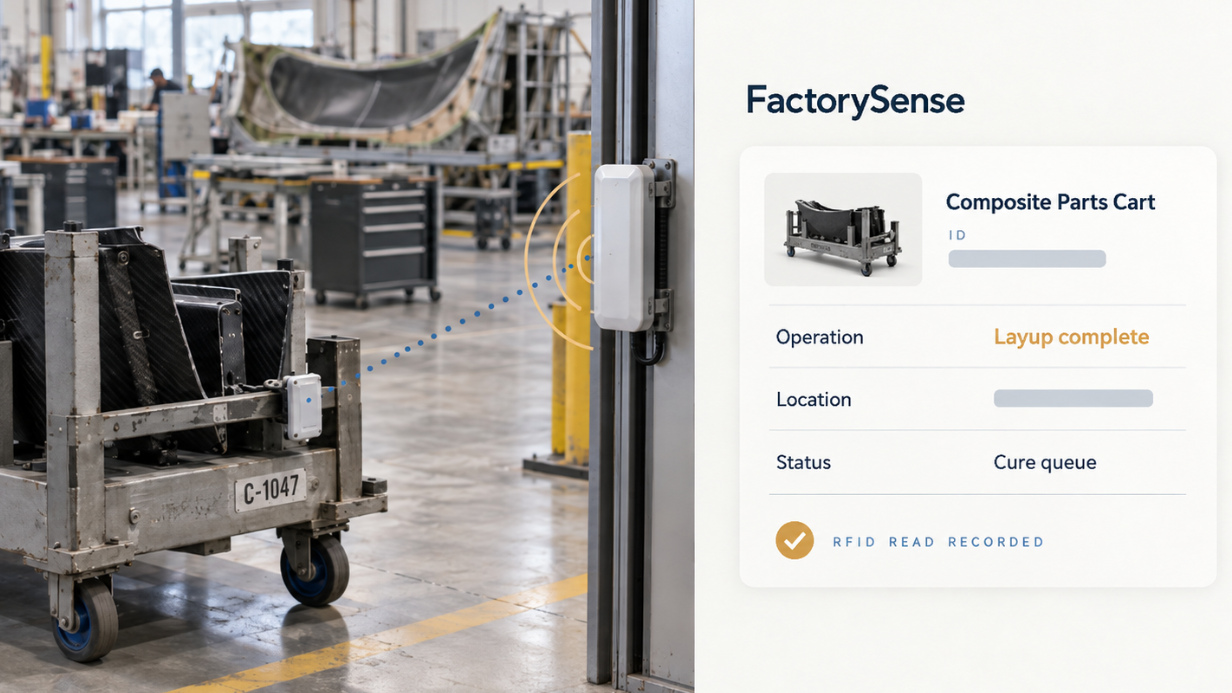
Passive UHF is usually the first technology FactorySense evaluates for warehouse, asset, inventory and WIP applications because it supports bulk reads and automated transitions. HF or NFC can be better where interaction should be deliberate and very close, while LF remains important in specialized applications such as animal identification and some access systems. The right choice follows the physical process and object rather than a frequency hierarchy.
A site and tag test should confirm that the chosen frequency and tag construction work in the actual environment. Metal, water and surrounding RF activity can change results enough that catalog range is not an acceptance criterion. Our RFID interference guide covers those environmental effects in more detail.
Sources and further reading
What frequency does RFID use?
RFID is a family of technologies rather than one frequency. Common systems include LF around 125 or 134 kHz, HF and NFC at 13.56 MHz, and passive UHF RAIN RFID in regional bands around 860 to 930 MHz.
What frequency is NFC?
NFC uses a base frequency of 13.56 MHz. NFC Forum specifications are designed around close, intentional interactions and include battery-free operating modes.
Which RFID frequency is used most often for industrial asset and inventory tracking?
Passive UHF is widely used for manufacturing, warehouse, inventory, asset and WIP applications because it supports multi-tag inventory and longer read distances. LF, HF and NFC remain better fits for other use cases where close coupling or deliberate interaction is desirable.
Schedule a complementary working session with an RFID professional to discuss your floor or yard, your systems of record, and where the visibility gap between them is costing you.
Book a session