
How Manufacturers Connect Real-Time Factory Data to Business Systems
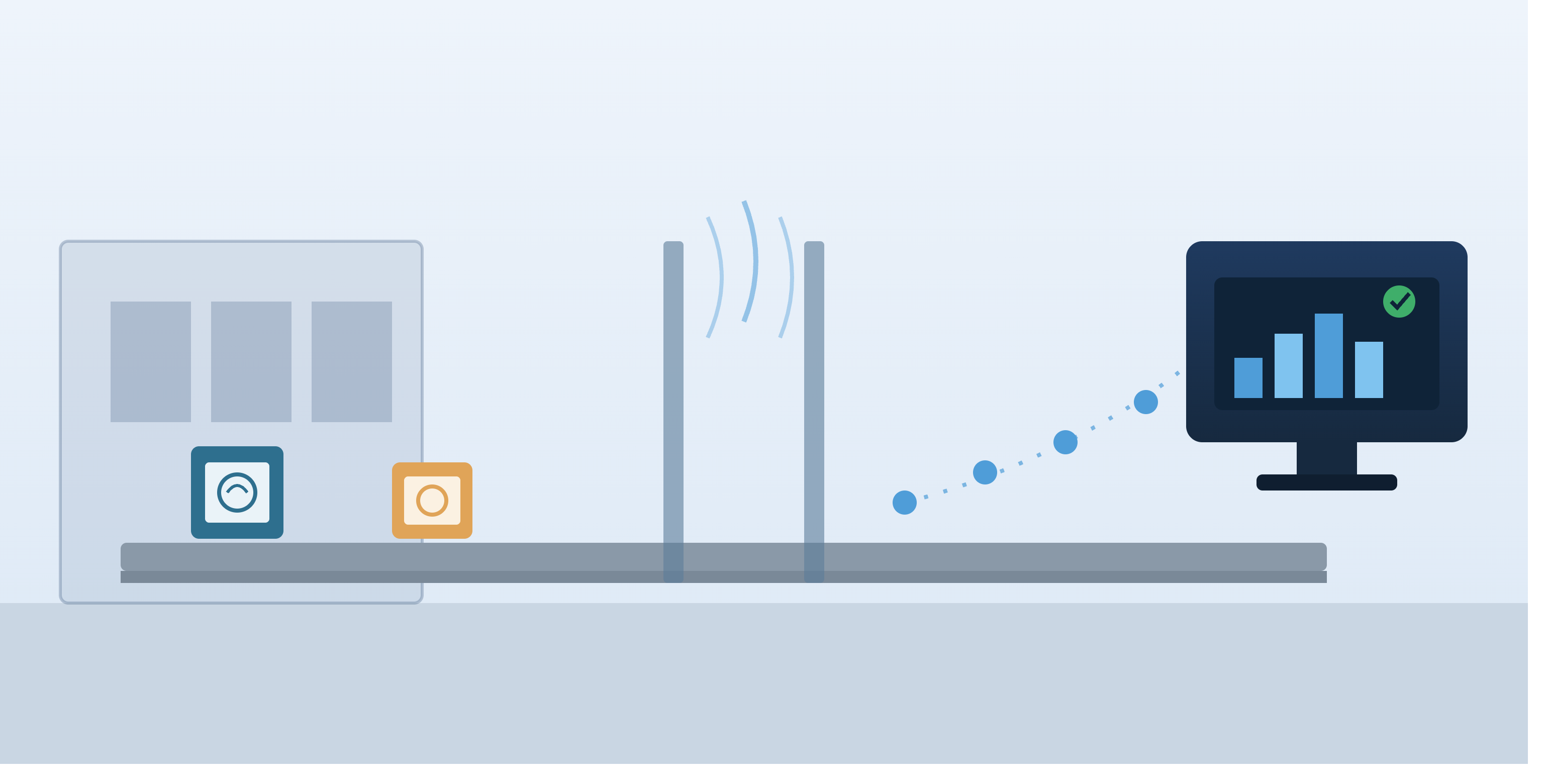
RFID Tracking Integration for ERP Systems: How Manufacturers Connect Real-Time Factory Data to Business Systems
Key Takeaways
- RFID integration connects physical manufacturing operations directly to ERP systems, enabling real-time visibility across inventory, production, and supply chain processes.
- Automated RFID data collection improves ERP accuracy by eliminating manual transactions, reducing delays, and minimizing human error.
- Real-time RFID and ERP integration provides the data foundation for Industry 4.0, artificial intelligence, analytics, and digital transformation initiatives.
What Is RFID Integration for ERP Systems?
RFID integration for ERP systems is the process of automatically capturing real-world manufacturing events and sending that information directly into enterprise software platforms such as SAP, Oracle, Microsoft Dynamics, Infor, and Epicor.
Instead of relying on manual barcode scans, spreadsheets, or employee data entry, RFID technology continuously tracks materials, inventory, work-in-process, tools, and finished goods as they move throughout a facility. RFID software then converts those physical events into ERP transactions in real time.
For manufacturers, this creates a direct connection between factory floor operations and business systems, resulting in better inventory accuracy, improved production visibility, and more reliable decision-making. Organizations implementing solutions such as RFID Software gain a continuous stream of operational data that keeps enterprise systems synchronized with physical operations.
Why Do Manufacturers Integrate RFID with ERP Systems?
Manufacturers integrate RFID with ERP systems to eliminate manual data collection and improve the accuracy of operational information.
Traditional ERP environments often depend on employees to scan barcodes, enter transactions, complete paperwork, or update spreadsheets. While these processes can work, they introduce delays and opportunities for error. As operations grow more complex, these challenges become increasingly difficult to manage.
RFID automation addresses this problem by collecting data automatically as materials, products, tools, and assets move through production and warehouse environments. Combined with solutions such as RFID Work-in-Process Tracking and RFID Inventory Management, manufacturers can maintain a real-time connection between physical operations and ERP records.
Common objectives include:
- Real-time inventory visibility
- Automated production tracking
- Improved work-in-process monitoring
- Reduced labor associated with data entry
- Better traceability and compliance
- More accurate ERP transactions
- Faster operational decision-making
RFID and ERP Integration Explained
What Is RFID?
RFID, or Radio Frequency Identification, is a wireless technology that automatically identifies and tracks tagged objects using radio waves. RFID tags can be attached to materials, products, containers, assets, tools, and work orders.
Unlike barcode systems, RFID does not require direct line-of-sight scanning and can often read multiple items simultaneously.
What Is an ERP System?
An ERP system, or Enterprise Resource Planning system, is software that manages core business processes including inventory, production, procurement, quality, finance, maintenance, and supply chain operations.
ERP systems serve as the central repository for operational and business information across manufacturing organizations.
What Does RFID-ERP Integration Do?
RFID-ERP integration automatically transfers real-world operational events into business systems. This ensures ERP records accurately reflect what is occurring throughout the facility.
As materials move, production steps are completed, or inventory changes location, RFID software captures those events and updates the ERP environment without requiring manual intervention.
Why ERP Systems Need Better Manufacturing Data
An ERP system is only as effective as the quality of the information it receives.
Many manufacturers experience challenges such as inventory discrepancies, delayed production reporting, inaccurate work-in-process status, lost assets, and incomplete transaction records. These issues rarely originate from ERP software itself. Instead, they result from the limitations of manual data collection processes.
When employees must manually record every inventory movement or production event, delays become unavoidable. Transactions may be forgotten, entered incorrectly, or completed long after the physical event occurred.
RFID eliminates many of these issues by capturing operational data automatically and continuously. The result is higher-quality information flowing into the ERP system and greater confidence in business decisions.
How RFID Integration Works
An RFID-enabled manufacturing environment consists of several interconnected layers.
At the physical level, RFID tags are attached to materials, inventory, work orders, containers, tools, or finished products. RFID readers positioned throughout the facility detect these tagged items as they move through receiving, production, warehousing, staging, and shipping operations.
The RFID software platform serves as the intelligence layer between the physical environment and enterprise systems. Rather than simply recording every tag read, the software filters duplicate reads, validates events, applies business rules, and determines which activities should be communicated to downstream systems.
Once validated, these events are transmitted directly into ERP platforms through APIs, middleware, or custom integrations.
Organizations often begin with an RFID Site Assessment or RFID Site Survey to identify where automated data collection will generate the greatest operational value.
What Data Can RFID Send to an ERP System?
RFID systems can automatically send a wide range of operational information to enterprise software platforms.
Common examples include:
- Inventory movements
- Material consumption
- Work order progression
- Asset location updates
- Shipping confirmations
- Receiving transactions
- Production completions
- Tool usage records
- Calibration events
- Quality inspection status
This information enables ERP systems to maintain an accurate digital representation of manufacturing operations.
RFID tracking integration connects manufacturing operations, ERP systems, Manufacturing Execution Systems (MES), inventory management systems, warehouse management systems, and supply chain processes through a shared stream of real-time operational data.
Real-Time Work-in-Process Visibility
One of the most valuable applications of RFID and ERP integration is work-in-process visibility.
Manufacturers frequently ask questions such as:
Where is a specific job currently located?
Which operation has been completed?
How long has material been waiting between processes?
What bottlenecks are affecting production performance?
Traditional ERP systems often depend on manual reporting to answer these questions. By the time information reaches the system, conditions on the production floor may have already changed.
RFID-enabled work-in-process tracking provides real-time visibility into manufacturing activities as they occur. Every movement through production can be captured automatically and synchronized with the ERP environment.
This allows managers to monitor production status, throughput, cycle times, queue times, and bottlenecks without relying on delayed manual updates.
Improving Inventory Accuracy
Inventory accuracy remains one of the most common challenges in manufacturing operations.
When ERP inventory records do not accurately reflect physical inventory, organizations experience stockouts, excess inventory, production disruptions, purchasing inefficiencies, and expedited shipping costs.
RFID improves inventory accuracy by continuously monitoring inventory movement and automatically updating ERP records whenever materials enter, exit, or relocate within a facility.
Unlike periodic cycle counts, RFID provides ongoing visibility into inventory activity.
As a result, manufacturers gain greater confidence in inventory data, improve planning accuracy, and reduce operational waste throughout the supply chain.
Connecting Manufacturing Operations to Enterprise Systems
Modern manufacturers rely on far more than ERP software alone.
Many organizations maintain an ecosystem that includes ERP platforms, Manufacturing Execution Systems (MES), warehouse management systems, quality management platforms, asset management applications, analytics tools, and artificial intelligence solutions.
RFID software serves as the bridge connecting these systems through a common source of operational truth.
Through solutions such as Custom RFID Software Development, organizations can create workflows and integrations tailored to their unique manufacturing processes.
Instead of isolated systems containing inconsistent information, manufacturers can establish a unified operational view across the enterprise.
What Are the Benefits of RFID Integration with ERP Systems?
The primary benefits of RFID and ERP integration include:
- Real-time visibility into manufacturing operations
- Improved inventory accuracy
- Reduced manual data entry
- Faster production reporting
- Better traceability
- Increased labor productivity
- More reliable ERP data
- Enhanced supply chain visibility
- Stronger compliance reporting
- Better data for AI and analytics
For organizations pursuing Industry 4.0 initiatives, RFID often serves as the automated data collection layer that supports enterprise-wide digital transformation.
Enabling AI and Industry 4.0 Initiatives
Artificial intelligence depends on accurate and timely operational data.
Many manufacturers pursue AI initiatives while still relying on delayed transactions, spreadsheets, and manually entered information. This limits the effectiveness of analytics and machine learning systems because the underlying data does not accurately reflect current operations.
RFID integration addresses this challenge by providing continuous streams of real-time manufacturing data.
When RFID systems are integrated with ERP platforms, organizations gain trusted visibility into inventory levels, material flow, production status, asset utilization, labor productivity, and process bottlenecks.
This data becomes the foundation for predictive analytics, machine learning, operational optimization, and broader Industry 4.0 initiatives.
Without reliable physical-world data collection, AI systems operate with incomplete information. RFID helps close that gap.
Common ERP Integration Use Cases
Manufacturers across multiple industries are integrating RFID with ERP systems to improve operational visibility and process automation.
Common applications include:
- Automated receiving transactions
- Inventory location tracking
- Work-in-process tracking
- Asset management
- Tool tracking
- Shipping verification
- Returnable container management
- Calibration tracking
- Material traceability
- Compliance reporting
Organizations within the Defense Industry often use RFID to improve traceability, asset accountability, and production visibility. Likewise, companies operating in the Medical Manufacturing Industry leverage RFID to strengthen compliance and inventory control.
Keys to a Successful RFID-ERP Integration
Successful RFID integration projects require more than installing readers and tags.
Manufacturers should begin by identifying the operational processes that will generate the greatest value through automation. Integration requirements should then be aligned with ERP workflows and business objectives.
Proper infrastructure design is equally important. RFID hardware must be positioned and configured to support the realities of the manufacturing environment.
Many organizations leverage RFID Consulting Services, Hourly RFID Consulting, and RFID Hardware Solutions to reduce implementation risk and accelerate project success.
RFID and ERP Integration Is the Foundation of Connected Manufacturing
RFID integration for ERP systems enables manufacturers to connect physical operations with digital business systems in real time.
By automatically capturing inventory movements, work-in-process events, asset locations, and production activities, RFID creates a continuous flow of trusted operational data. This improves ERP accuracy, increases visibility, reduces manual effort, and supports advanced initiatives such as artificial intelligence, Industry 4.0, and supply chain optimization.
As manufacturers continue investing in automation, analytics, and digital transformation, RFID will increasingly serve as the data collection layer that keeps enterprise systems synchronized with reality.
For organizations seeking real-time operational intelligence, RFID and ERP integration provide the foundation for a truly connected manufacturing enterprise.
Frequently Asked Questions
How does RFID integration improve ERP accuracy?
RFID automatically captures material movements, inventory transactions, and production events, reducing manual entry errors and improving ERP data quality.
Can RFID integrate with SAP?
Yes. RFID systems commonly integrate with SAP ERP environments through APIs, middleware platforms, and custom software integrations.
Can RFID integrate with Microsoft Dynamics?
Yes. Microsoft Dynamics can receive RFID-generated inventory, production, shipping, and asset tracking information through standard integration methods.
What manufacturing processes benefit most from RFID integration?
Inventory management, work-in-process tracking, asset management, tool tracking, shipping verification, and material traceability often generate the highest return on investment.
Is RFID better than barcode scanning for ERP integration?
RFID can automatically identify multiple items simultaneously without requiring line-of-sight scanning, making it more efficient than barcode systems for many manufacturing applications.
Why is RFID important for Industry 4.0?
Industry 4.0 depends on accurate real-time operational data. RFID provides automated data collection that supports analytics, artificial intelligence, automation, and digital transformation initiatives.