
RFID Tracking in Manufacturing Automation: Building Smarter and Faster Production Operations

RFID Tracking in Manufacturing Automation: Building Smarter and Faster Production Operations
Key Takeaways
- RFID tracking gives manufacturers real-time visibility into inventory, assets, work-in-progress, and production workflows.
- Manufacturing automation powered by RFID reduces manual errors, improves throughput, and increases operational efficiency.
- Integrating RFID systems with ERP and MES platforms helps manufacturers make faster, data-driven decisions across the factory floor.
RFID Tracking Is Reshaping Modern Manufacturing
Manufacturing companies are under constant pressure to increase efficiency, reduce waste, improve traceability, and respond faster to changing customer demand. Traditional tracking systems based on spreadsheets, barcode scanning, and manual processes often create visibility gaps that slow operations and introduce costly inaccuracies.
RFID tracking is changing that.
Modern RFID systems allow manufacturers to automatically identify, locate, and monitor materials, assets, tools, inventory, and work-in-progress in real time. Unlike barcode systems that require line-of-sight scanning, RFID tags can be read automatically and simultaneously across large production environments.
As manufacturing automation continues to expand, RFID tracking has become one of the foundational technologies driving smarter factories and connected industrial operations.
Manufacturers that invest in RFID tracking gain better visibility into operations while reducing labor-intensive processes that slow productivity. RFID technology also enables companies to connect physical manufacturing activity directly into digital business systems for real-time operational intelligence.
For manufacturers pursuing Industry 4.0 initiatives, RFID tracking provides the data layer necessary to automate workflows, improve analytics, and optimize supply chain performance.
FactorySense provides comprehensive RFID tracking solutions designed for manufacturing, warehouse, and supply chain operations.
How RFID Tracking Supports Manufacturing Automation
Manufacturing automation depends on accurate, real-time operational data. Without visibility into inventory movement, asset utilization, or production flow, automation systems become limited.
RFID tracking fills this gap by continuously collecting operational data across the manufacturing environment.
When RFID readers automatically capture tagged materials, products, containers, or equipment, manufacturers gain immediate insight into inventory locations, material movement, production bottlenecks, work-in-progress status, asset utilization, labor activity, production cycle times, and shipping and receiving activity.
This real-time visibility enables manufacturers to automate workflows that previously required manual tracking.
For example, RFID systems can automatically trigger inventory replenishment alerts when material levels drop below predefined thresholds. RFID can also automate quality control tracking, production routing, shipping verification, and warehouse transactions.
The result is a more connected and intelligent manufacturing operation.
Manufacturers exploring automation initiatives often invest in advanced RFID software solutions that improve operational visibility and workflow automation.
Improving Inventory Accuracy With RFID Tracking
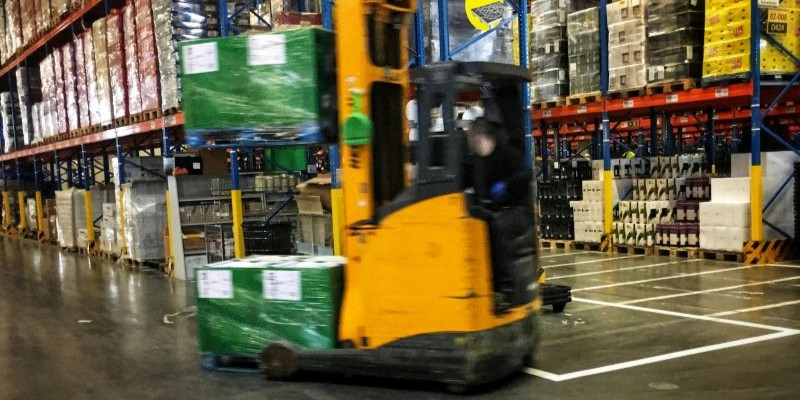
Inventory inaccuracies create serious operational problems in manufacturing environments.
When manufacturers lack accurate inventory data, production delays increase, material shortages become more common, and labor costs rise due to manual inventory reconciliation.
RFID tracking dramatically improves inventory accuracy by automating inventory visibility throughout manufacturing and warehouse operations.
Instead of relying on manual barcode scans or paper-based processes, RFID systems automatically capture inventory movement in real time.
This provides manufacturers with continuous visibility into:
- Raw materials
- Work-in-progress inventory
- Finished goods
- Returnable containers
- Tools and assets
- Warehouse inventory
With RFID-enabled inventory management, manufacturers can reduce stock discrepancies while improving production planning accuracy.
Warehouse operations also benefit significantly from RFID automation. Real-time inventory visibility allows warehouse teams to optimize picking, receiving, shipping, and replenishment processes.
FactorySense RFID hardware solutions help manufacturers streamline inventory management, warehouse tracking, and operational visibility.
RFID and ERP Integration
One of the biggest advantages of RFID tracking is the ability to integrate operational data directly into ERP systems.
ERP integration allows manufacturers to synchronize physical inventory movement with digital business systems automatically.
Without RFID integration, ERP systems often rely on delayed or manually entered data. This creates inaccuracies that affect purchasing, production planning, inventory forecasting, and customer fulfillment.
RFID tracking improves ERP performance by providing real-time operational updates.
Examples include:
- Automatic inventory transactions
- Real-time material consumption updates
- Production completion reporting
- Shipping confirmation automation
- Asset tracking updates
- Warehouse inventory synchronization
When RFID systems integrate with ERP platforms, manufacturers gain a much clearer understanding of operational performance.
This integration also reduces manual data entry and improves reporting accuracy across the organization.
Manufacturers implementing RFID and ERP integration often see measurable improvements in inventory accuracy, production efficiency, and supply chain responsiveness.
Many manufacturers rely on custom RFID software development to integrate RFID systems directly into ERP and operational platforms.
Real-Time Asset Tracking in Manufacturing
Manufacturing facilities rely on expensive tools, equipment, containers, and mobile assets that are often difficult to track.
Lost or misplaced assets can create production delays, increase operational costs, and reduce productivity.
RFID tracking helps manufacturers monitor asset movement and utilization automatically.
By attaching RFID tags to critical assets, manufacturers can quickly identify:
- Asset locations
- Equipment usage
- Maintenance status
- Calibration tracking
- Tool availability
- Container movement
This visibility improves operational efficiency while reducing time spent searching for equipment.
RFID asset tracking also supports preventive maintenance programs by helping manufacturers monitor usage patterns and maintenance schedules.
Many manufacturers use RFID systems to optimize tool control, equipment accountability, and maintenance operations across multiple facilities.
FactorySense offers specialized RFID consulting services that help manufacturers deploy customized tracking solutions based on operational requirements.
RFID Tracking for Supply Chain Visibility

Supply chain visibility has become increasingly important for manufacturers facing global logistics challenges, material shortages, and rising customer expectations. RFID tracking improves supply chain performance by providing real-time visibility into material movement throughout manufacturing and distribution operations. Manufacturers can use RFID technology to monitor supplier shipments, incoming materials, warehouse inventory, production movement, finished goods shipments, returnable assets, and logistics workflows. This comprehensive visibility enhances coordination between suppliers, manufacturers, warehouse teams, and logistics providers, helping to identify delays, reduce shipping errors, and improve customer fulfillment performance. By connecting RFID tracking with supply chain systems, manufacturers can create more resilient and responsive operations. Many manufacturers use the FactorySense product platform to improve supply chain visibility and operational coordination.
RFID Tracking and Industry 4.0
Industry 4.0 initiatives depend heavily on connected data systems that provide real-time operational intelligence.
RFID tracking plays a critical role in Industry 4.0 by enabling manufacturers to connect physical manufacturing operations with digital analytics platforms.
RFID-generated data can feed:
- Manufacturing execution systems
- ERP systems
- AI analytics tools
- Warehouse management systems
- Predictive maintenance platforms
- Production dashboards
This data allows manufacturers to identify inefficiencies, optimize workflows, and improve production planning.
As AI and advanced analytics continue to expand in manufacturing, RFID tracking becomes even more valuable.
Manufacturers using RFID-generated operational data can improve forecasting, reduce downtime, and increase production throughput.
Modern RFID software platforms provide the data infrastructure needed to support Industry 4.0 initiatives.
Choosing the Right RFID Tracking Strategy
Successful RFID implementation requires careful planning.
Manufacturers should evaluate:
- Operational goals
- Facility layout
- Inventory workflows
- Environmental conditions
- ERP integration requirements
- Asset tracking needs
- Warehouse processes
- Scalability requirements
Different manufacturing environments require different RFID hardware configurations, software integrations, and deployment strategies.
For example, composite manufacturing operations may require specialized RFID tags designed for high-temperature or metallic environments. Warehouse tracking systems may require long-range readers and automated portal scanning.
Partnering with experienced RFID consultants helps manufacturers avoid common implementation challenges while accelerating deployment timelines.
FactorySense provides customized RFID consulting and implementation services for manufacturing operations of all sizes.
Manufacturers evaluating RFID systems often combine RFID consulting, RFID hardware, and RFID software to create scalable operational visibility across manufacturing and warehouse operations. Many organizations also use the broader FactorySense platform and related product solutions to support long-term automation strategies.
The Future of RFID in Manufacturing Automation
RFID tracking will continue to play a major role in the future of manufacturing automation.
As manufacturers adopt more connected technologies, the demand for accurate real-time operational data will continue to grow.
RFID systems provide the visibility foundation necessary for:
- Smart factories
- AI-driven analytics
- Autonomous material handling
- Predictive maintenance
- Advanced warehouse automation
- Digital twins
- Real-time supply chain monitoring
Manufacturers that invest in RFID technology today position themselves for greater operational agility and long-term competitiveness.
RFID tracking no longer serves only as an inventory management tool. It has become a strategic technology that supports operational efficiency, automation, traceability, and digital transformation.
Manufacturers looking to modernize operations can leverage FactorySense RFID solutions to improve visibility, streamline workflows, and support scalable automation initiatives.
Frequently Asked Questions
What is RFID tracking in manufacturing?
RFID tracking uses radio frequency identification technology to automatically monitor inventory, assets, tools, and materials throughout manufacturing and warehouse operations.
How does RFID improve manufacturing automation?
RFID improves manufacturing automation by providing real-time operational data that helps automate inventory tracking, production workflows, asset management, and supply chain visibility.
Can RFID systems integrate with ERP software?
Yes. Modern RFID systems can integrate directly with ERP platforms, warehouse systems, and manufacturing execution systems to automate operational reporting and improve inventory accuracy.